
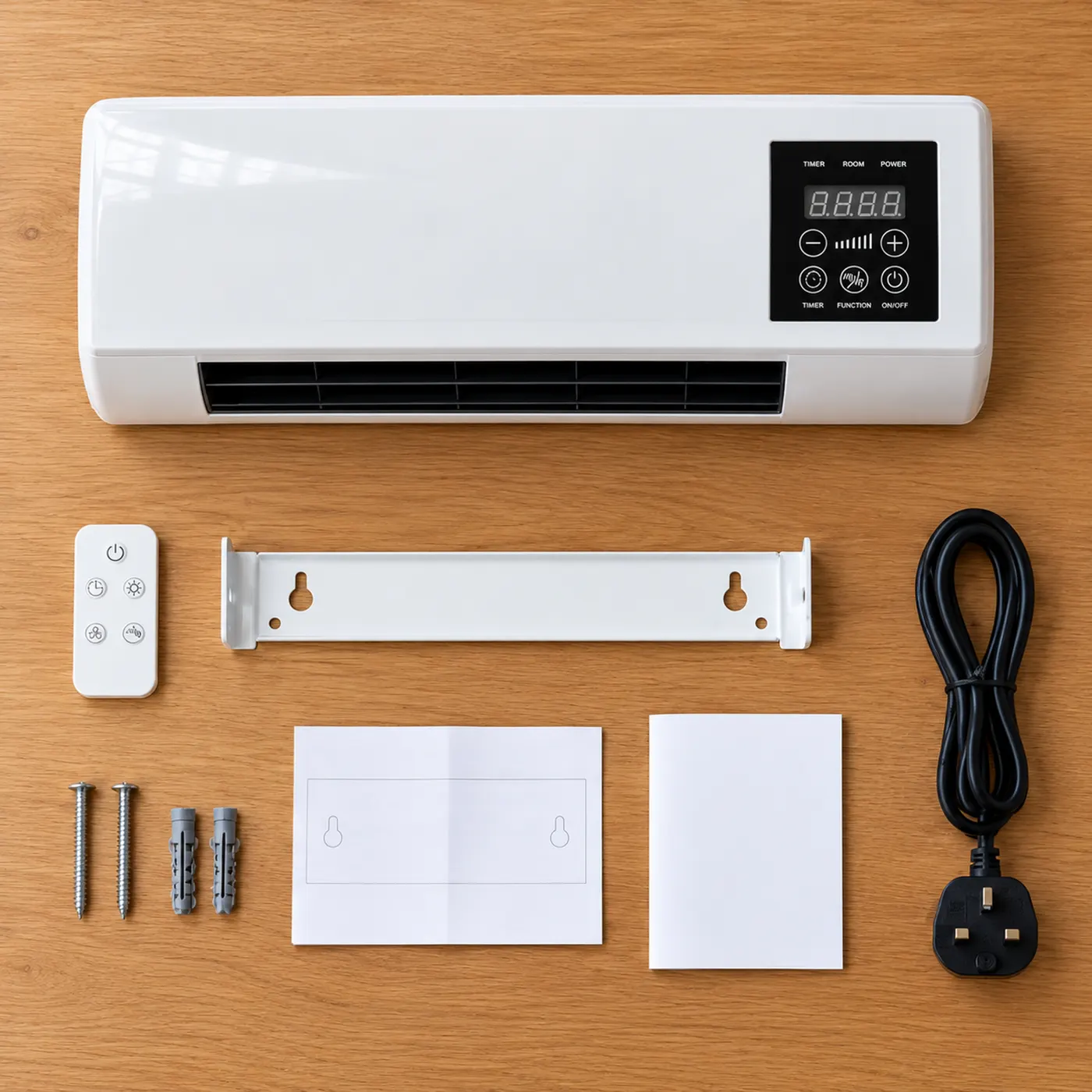
From £129
free UK delivery
About £0.53
an hour at full power
10 min
to fit, no electrician
30 days
money back
Written by the WarmFall team · Fact-checked 28 October 2026 · Sources listed below
How a ceramic heater works
Electricity heats ceramic plates, and a fan blows air across them into the room. Ceramic self-regulates its temperature better than a bare wire coil, which helps safety and comfort.
Benefits of ceramic over metal coil
- Faster, more even warmth
- Lower surface temperature on the element
- No glowing coils or burnt-dust smell
- Works well with a thermostat for steady temperatures
Is a ceramic heater cheaper to run?
Per kWh, all electric heaters give about the same heat. A ceramic heater saves money mainly by pairing well with a thermostat, so it holds your temperature without running flat out.
WarmFall: a wall-mounted ceramic heater
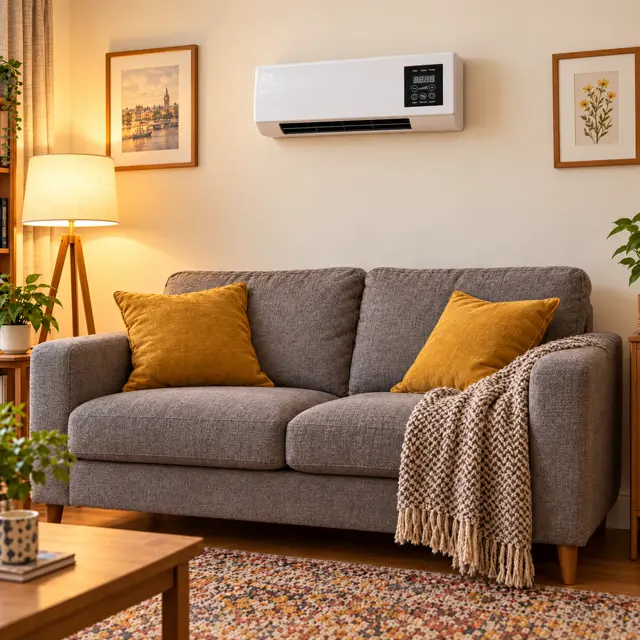
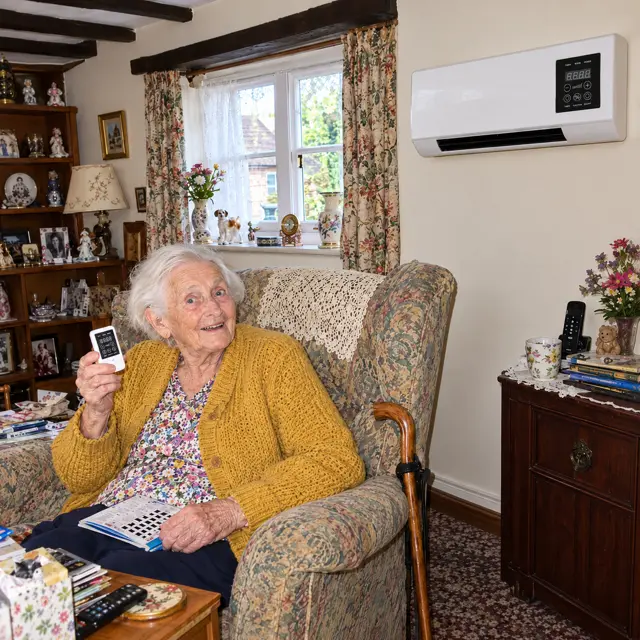
WarmFall is a 2000W plug-in wall heater with a ceramic core, adjustable thermostat, remote control, overheat cut-out and 8-hour auto-off. It mounts about 1.8m up the wall with 2 screws and blows warm air down to where you sit.
Does a ceramic heater keep giving heat after it switches off?
Ceramic material can retain some heat briefly, but a fan-assisted ceramic heater does not act like a large storage heater. Once the heating element switches off, the fan may stop and the room's warmth will gradually disperse. How quickly the room cools depends on insulation, draughts, room size and outside conditions. Do not choose a ceramic model on the assumption that it will continue heating for a long period without power. For steady comfort, use the thermostat and timer as instructed, and consider the room's insulation. Keep the air inlet and outlet clear so the heater can work as designed; never cover it to try to hold heat in.
Winter offer · Free UK delivery
Choose your WarmFall bundle
No account needed · Pay with Apple Pay, Google Pay, PayPal or card
- Free UK delivery
- 30-day money back
- Secure SSL checkout


You'll enter delivery details and pay by card, Apple Pay or Google Pay on our secure Shopify checkout.
Are ceramic fan heaters noisy?
A ceramic heater that uses a fan will make some sound while moving air. The noise varies by design and fan speed, so check the maker's product information if quiet operation is important. It is not usually silent in the way a passive panel heater can be. Think about where you plan to use it: a soft fan hum may be acceptable in a living room, while it could bother someone during sleep or concentrated work. Never obstruct the fan to reduce noise, since restricted airflow may affect safe operation. If noise changes suddenly, or the heater rattles or smells unusual, switch it off and consult the manufacturer's guidance rather than opening the casing.
How much does a 2kW ceramic heater cost to run?
The maximum energy cost follows the same calculation as for other 2kW electric heaters. At 26.32p/kWh, running at full power for one hour uses 2kWh and costs 2 × 26.32p = 52.64p, about 53p. Four continuous full-power hours would be about £2.11. These are estimates, exclude standing charges and depend on the rate in your tariff. A thermostat can stop the element once the selected room temperature is reached, reducing the time spent at full power; actual consumption varies with insulation, room temperature, setting and use. Ceramic construction does not by itself mean a lower cost per kWh.
Does a ceramic heater need a fan to work?
Some ceramic heaters use a fan to move warm air into the room, while other products may use a different design. A fan-assisted model can distribute warmth more quickly than relying only on natural convection, but it also makes operating noise and needs clear airflow. Check the product description to understand how the particular model works. Keep the inlet and outlet free of dust and objects, and follow the cleaning instructions. Do not dismantle the appliance to inspect its ceramic element. If a fan fails or airflow becomes weak, stop using the heater and contact the manufacturer or an appropriate repair service.
Can I use a ceramic heater to dry clothes?
Do not drape clothes or towels over a heater or put them where they block its airflow. Fabric can obstruct ventilation, overheat or ignite, and moisture may affect electrical equipment. Dry laundry in a safe place away from the appliance, following its instructions and general fire-safety guidance. A heater is designed to warm a room, not to act as a clothes dryer. Keep curtains, bedding and other combustible materials clear as well. An overheat cut-out is a backup safety feature, not permission to cover the heater or use it in a way the manufacturer prohibits.
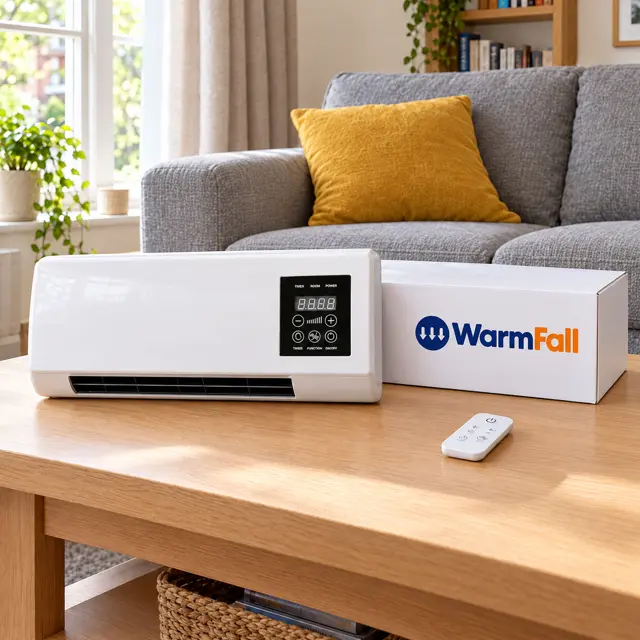
WarmFall 2000W Wall Heater
- Thermostat, remote & 8-hour timer
- Fits in 10 minutes, UK plug
- Free UK delivery · 30-day money back
How long does a ceramic heater take to warm a room?
There is no single warm-up time because it depends on the heater's output, room dimensions, starting temperature, insulation, draughts and where the warmth is directed. A fan can make warm air noticeable relatively quickly, but warming the walls, furniture and full room takes longer. A 2kW model is specified for rooms up to 25m², though colder or less insulated rooms may take longer to feel comfortable. Use a thermostat rather than repeatedly switching to maximum, and keep doors closed if you want to focus warmth in one space. The stated room coverage is a guide, not a guarantee of a particular temperature or warm-up time.
Frequently asked questions
Are ceramic heaters safe?
Ceramic elements run at a lower surface temperature than bare coils. Look for an overheat cut-out and auto-off too, which WarmFall has.
Do ceramic heaters dry out the air?
All heaters lower relative humidity slightly as they warm the air. Ceramic heaters don't burn oxygen or produce fumes.
Is a ceramic heater the same as a convection heater?
A fan-assisted ceramic heater heats air at a ceramic element and moves it with a fan. Convection heaters generally warm air that rises naturally. Product designs vary, so check how the specific heater circulates heat.
Can I leave a ceramic heater plugged in when not in use?
Follow the manufacturer's instructions. Switch it off when not needed, and unplug it before cleaning or if the manual recommends unplugging after use. Check the plug and cable periodically for damage.
Do ceramic heaters have exposed glowing elements?
In many ceramic designs, the heating element is not a bare glowing wire coil, but construction varies by model. Read the product information and keep the appliance's vents and casing intact.
Will a ceramic heater make the room less humid?
Warming air can lower its relative humidity even when no moisture is removed. Ventilate rooms appropriately and address the source of persistent damp or condensation rather than relying on a heater alone.
Is a ceramic heater safe for a bedroom?
Use it only as its manufacturer allows, keep it clear of bedding and curtains, and do not leave it unattended unless the instructions specifically permit that use. A timer is an additional safeguard, not supervision.
Does ceramic mean the heater uses less power?
No. Power use is based mainly on the heater's wattage and operating time. A 2kW ceramic model running at full output for an hour uses 2kWh, like another 2kW electric heater.
Related guides
- What is the cheapest electric heater to run?
- Electric panel heaters vs WarmFall
- Electric wall heaters: the UK buying guide
Sources
Running-cost figures are estimates based on the Ofgem price cap average of 26.32p/kWh (1 October–31 December 2026). Your costs depend on your tariff, room and usage.