
From £129
free UK delivery
About £0.53
an hour at full power
10 min
to fit, no electrician
30 days
money back
Written by the WarmFall team · Fact-checked 28 October 2026 · Sources listed below
Why conservatories are hard to heat
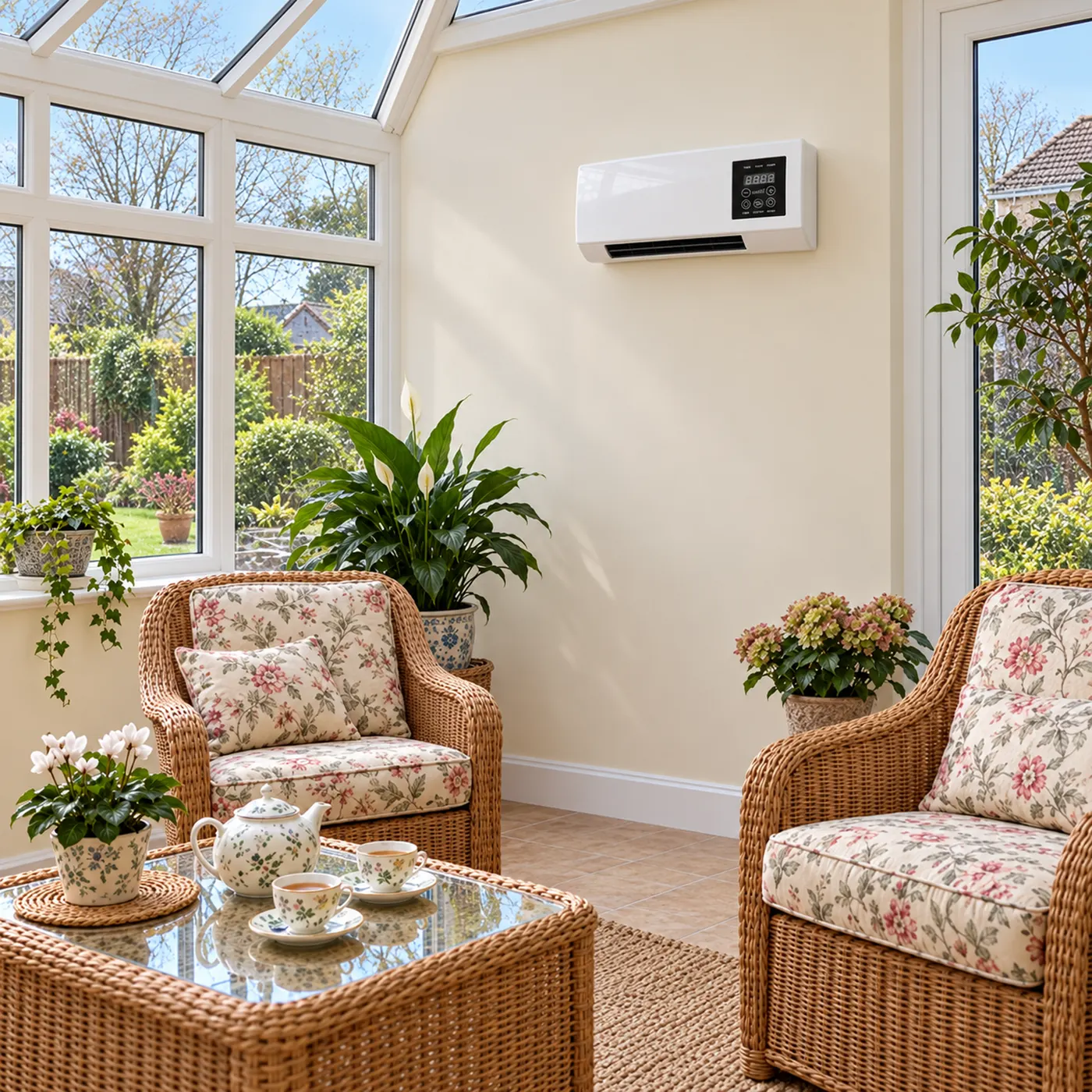
Glass loses heat quickly, so slow heaters that warm the air near the ceiling struggle. Fast, directed warmth works better.
Tips
- Use blinds or thermal curtains at night
- Add rugs on tiled floors
- Close the door to the house to hold the heat in
- Size the heater for the room; very large conservatories may need two
WarmFall for conservatories
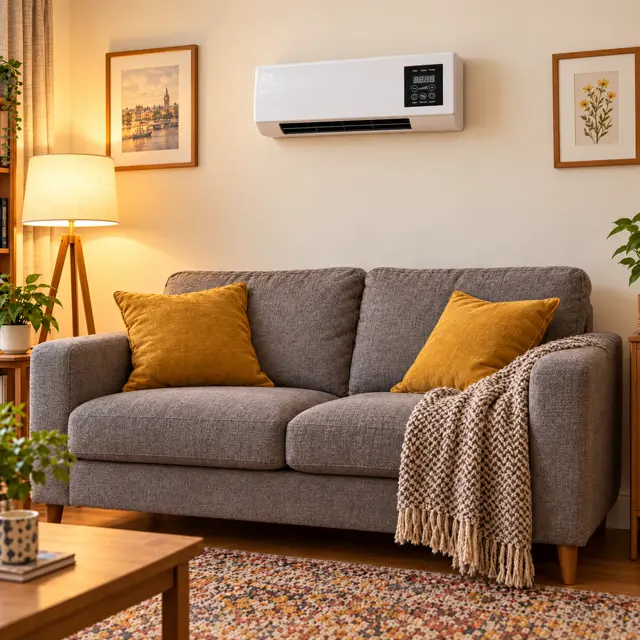
WarmFall is a 2000W plug-in wall heater with a ceramic core, adjustable thermostat, remote control, overheat cut-out and 8-hour auto-off. It mounts about 1.8m up the wall with 2 screws and blows warm air down to where you sit.
Can you heat a conservatory in winter without wasting energy?
Start by deciding when and where you need warmth rather than trying to keep the whole conservatory warm all day. Close the door to the house, draw suitable blinds after dark and deal with draughts around external doors. Use a thermostat so the heater reduces output when the chosen temperature is reached. A conservatory with extensive glazing loses heat quickly, so expectations matter: a heater can make the occupied area more comfortable, but it cannot make every structure feel like a well-insulated room. For a large or poorly insulated conservatory, one heater may not be enough; improving insulation or using more than one appropriately positioned heater may be necessary.
How much does a 2kW conservatory heater cost per hour?
At the Ofgem electricity unit rate of 26.32p/kWh for October to December 2026, a 2kW heater running continuously at full power uses 2kWh and costs about 53p per hour (2 × 26.32p = 52.64p). This is an estimate based on the unit rate; your tariff may differ. A thermostat can switch the heater on and off as the room warms, so actual consumption over an hour may be lower, but a cold, draughty conservatory may call for frequent heating. For example, two hours at full power would be about £1.05. Check your current bill for your own unit rate and remember that the estimate excludes any standing charge.
Winter offer · Free UK delivery
Choose your WarmFall bundle
No account needed · Pay with Apple Pay, Google Pay, PayPal or card
- Free UK delivery
- 30-day money back
- Secure SSL checkout


You'll enter delivery details and pay by card, Apple Pay or Google Pay on our secure Shopify checkout.
Where should a conservatory heater go?
Choose a dry, stable indoor position with a clear path for warm air and an accessible socket. Keep the heater away from curtains, blinds, furniture and plants, and follow the manufacturer's clearance and mounting instructions. A wall position can preserve floor space, but avoid fitting it where it will blow directly at delicate items or be blocked by a table. Do not use a domestic plug-in wall heater outdoors or where it may get wet. A wall heater needs a suitable wall and secure fixings; if you are unsure about the wall construction or safe location, ask a competent installer rather than guessing.
Are electric heaters suitable for a glass conservatory?
They can provide convenient local warmth, particularly while people are using the room, but the glazing and roof can make heat loss substantial. A thermostatic fan or ceramic heater warms the occupied space quickly; it does not insulate the building or guarantee an even temperature throughout. Consider whether roof blinds, better seals or other improvements are practical before buying more heating. If the room is very large or poorly insulated, it may need more than one heater and can still be costly to keep warm for long periods. Use any heater only for dry indoor conditions and follow its instructions on positioning, ventilation and electrical supply.
Is a wall-mounted heater practical in a conservatory?
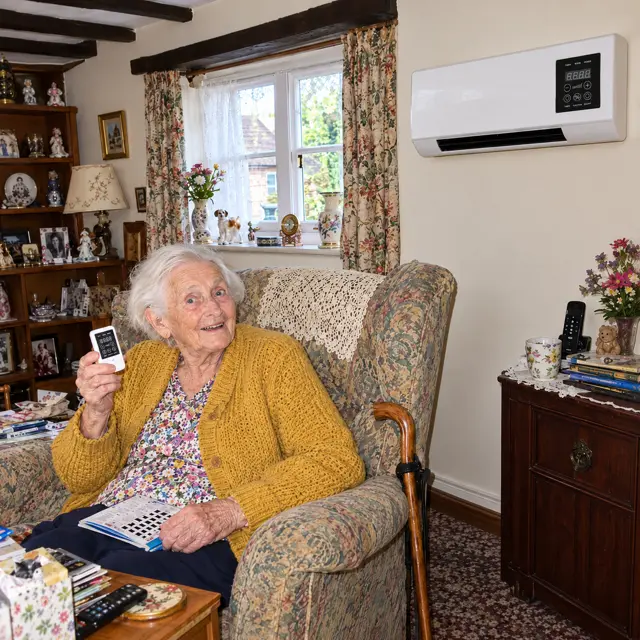
It can be useful where a suitable solid wall section is available and floor space is limited. Before choosing a spot, check that the heater can be mounted securely, plugged directly into an appropriate socket and kept clear of glazing dressings and furniture. A plug-in model avoids changes to fixed wiring, but mounting still involves drilling and may not suit every wall or rental agreement. WarmFall is a 2000W plug-in wall heater with an adjustable thermostat and DownFlow™ ceramic core that directs warm air downwards. Use it only indoors in a dry room; it is not a wet-area or outdoor heater.
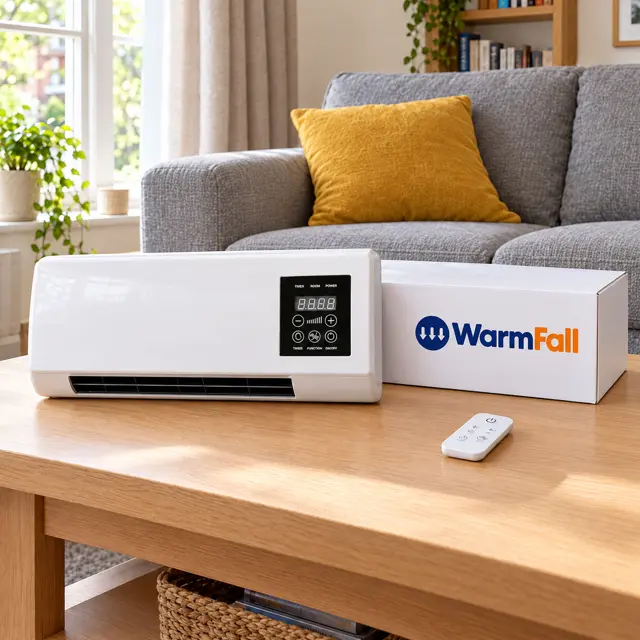
WarmFall 2000W Wall Heater
- Thermostat, remote & 8-hour timer
- Fits in 10 minutes, UK plug
- Free UK delivery · 30-day money back
How can you keep conservatory heating costs under control?
Heat the room only when you plan to use it, keep the door to the rest of the house closed and use the thermostat rather than leaving the heater at maximum. Reducing draughts and covering windows at night can help retain warmth, though do not cover the heater or block its air outlet. Compare the likely cost of heating the space with how often you use it: at 26.32p/kWh, a 2kW heater at full output is roughly 53p per hour, but cycling changes actual use. These figures are estimates, not a promise of a particular bill. Avoid running a heater unattended for long periods and follow the product's auto-off and safety guidance.
Frequently asked questions
What size heater do I need for a conservatory?
Because of heat loss through glass, allow more power than a normal room. A 2kW heater suits small to medium conservatories; larger ones may need two.
Can I fit a wall heater in a conservatory?
Yes, on a solid wall section. WarmFall's fixings suit brick, plasterboard and breeze block.
Will a 2kW heater warm a large conservatory?
It depends on the size, glazing, insulation and draughts. A 2kW model is intended for rooms up to about 25m² in suitable conditions, but a large or poorly insulated conservatory may need more than one heater and may still lose warmth quickly.
Can I leave a conservatory heater on all day?
Follow the manufacturer's instructions and avoid leaving a heater running unattended. Use the thermostat and any timer or auto-off feature to limit operation to the times you need warmth. A cold, highly glazed room can require substantial energy to maintain temperature.
Can I use a heater in a damp conservatory?
Only use a heater in the dry indoor conditions specified by its manufacturer. Do not expose a domestic plug-in wall heater to rain, splashes or condensation, and do not use it outdoors. If the room is damp, address the cause and keep electrical equipment dry.
What is the estimated cost for three hours at full power?
At 26.32p/kWh, a 2kW heater uses 6kWh in three hours, which is about £1.58. This is an estimate using the stated unit rate and assumes continuous full-power operation; thermostat cycling and your actual tariff will change the cost.
Can I mount a heater on conservatory glazing?
Do not mount it on glass. Follow the product instructions and use a suitable wall or other approved mounting surface with secure fixings. If no appropriate surface is available, choose a suitable alternative heater rather than improvising a fitting.
Does a thermostat make heating free once the room is warm?
No. A thermostat can reduce energy use by switching the heater off or cycling it when the set temperature is reached, but it will use electricity whenever it operates. Heat loss through glazing means it may switch back on regularly.
Related guides
- Heating a garage or workshop
- What is the cheapest electric heater to run?
- The best heater for a cold bedroom
Sources
Running-cost figures are estimates based on the Ofgem price cap average of 26.32p/kWh (1 October–31 December 2026). Your costs depend on your tariff, room and usage.