
From £129
free UK delivery
About £0.53
an hour at full power
10 min
to fit, no electrician
30 days
money back
Written by the WarmFall team · Fact-checked 28 October 2026 · Sources listed below
Plug-in vs hard-wired
Hard-wired heaters need a fused spur and an electrician, which adds cost and isn't always allowed in rented homes. A plug-in wall heater uses a normal socket, so you can fit it, move it or take it with you when you move.
What makes a good plug-in wall heater
- Thermostat: the biggest factor in running costs
- Ceramic element: warms quickly, no burnt-dust smell from exposed coils
- Safety: overheat cut-out, auto-off, cool-touch casing
- A genuine UK plug and UK returns
WarmFall: the plug-in wall heater we recommend
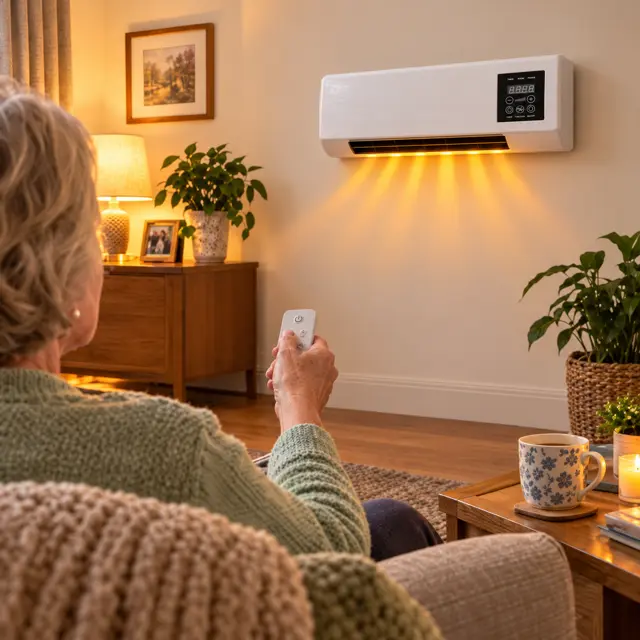
WarmFall is a 2000W plug-in wall heater with a ceramic core, adjustable thermostat, remote control, overheat cut-out and 8-hour auto-off. It mounts about 1.8m up the wall with 2 screws and blows warm air down to where you sit.
Can a plug-in wall heater go into an extension lead?
For a high-power appliance, use a suitable wall socket directly unless the manufacturer clearly says otherwise. An extension lead or adaptor can be overloaded, particularly if other appliances share it, and a cable may be damaged, covered or become a trip hazard. A 2kW heater draws substantial power while operating, so plan its position around a suitable socket rather than stretching a lead across a room. Do not daisy-chain extensions or run a cable under rugs. If the socket is loose, damaged, discoloured or becomes hot, stop using it and seek advice. Check the heater instructions and contact an electrician if you are unsure whether the socket or circuit is suitable.
What does it cost to run a 2kW plug-in heater?
Multiply the heater's power in kilowatts by the hours used and your electricity unit price. At 26.32p/kWh, a 2kW heater on full output for one hour costs 2 × 26.32p = 52.64p, or about 53p. If it runs at full power for 90 minutes, the estimate is about 79p. This is an estimate, not a guaranteed bill figure: your tariff may be different, and the calculation excludes standing charges. A thermostat may switch off the heating element after the room is warm, so consumption can be less than continuous full-power use. Use your own unit rate for a more relevant estimate.
Winter offer · Free UK delivery
Choose your WarmFall bundle
No account needed · Pay with Apple Pay, Google Pay, PayPal or card
- Free UK delivery
- 30-day money back
- Secure SSL checkout


You'll enter delivery details and pay by card, Apple Pay or Google Pay on our secure Shopify checkout.
Is a plug-in heater useful in a home office?
It can provide targeted warmth in a room used for work, without needing to heat other parts of the home. Place it so the air outlet is unobstructed and the cable does not cross a walkway or sit under a chair. Set the thermostat to a comfortable level rather than leaving it on maximum, and switch it off when you finish. A heater mounted on the wall may keep floor space clear, but it still needs an appropriate socket and safe clearances. If the office is persistently cold, check for draughts and consider whether the room's insulation or window seals need attention. Do not cover vents or use the heater to dry clothing.
How can I use a plug-in heater safely around children?
Position and operate the heater exactly as instructed, keeping children from playing with the controls, plug or cable. A wall-mounted unit can keep the appliance off the floor, but its casing and warm airflow can still pose risks. Keep toys, bedding, curtains and furniture away from it, and supervise children in the room. Use an automatic shut-off as an extra safeguard, not a reason to leave an appliance unattended. Do not allow a child to plug in or move a heater. If the socket or cable is accessible and likely to be pulled, choose a safer position or ask for advice rather than hiding the cable under a rug.
Can a plug-in wall heater be moved after fitting?
The heater may plug into an ordinary socket, but a wall-mounted unit is secured to a bracket and is not meant to be carried while attached. Switch it off, unplug it and follow the manufacturer's removal instructions before moving it. The old fixing holes may need making good, and a new location must meet the same rules for clearances, wall suitability and socket access. In a rented home, check permission before making another set of holes. Avoid repeatedly moving a unit if the bracket or wall becomes loose; stop using it until the fixing has been checked and made secure.
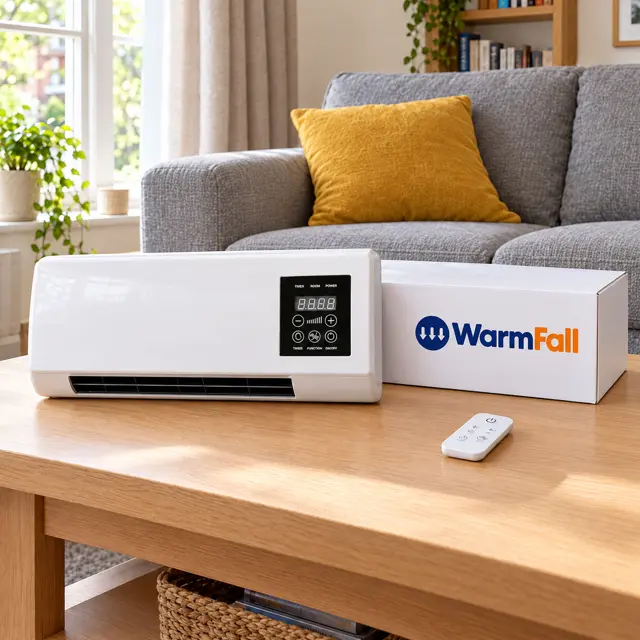
WarmFall 2000W Wall Heater
- Thermostat, remote & 8-hour timer
- Fits in 10 minutes, UK plug
- Free UK delivery · 30-day money back
Can I use a plug-in wall heater with a smart plug?
Do not assume a smart plug is suitable for a high-power heater. Check the heater's instructions and the smart plug's rated load, and use an arrangement only if both manufacturers permit it. The heater's own thermostat, timer and safety cut-outs should remain available and unobstructed. A smart plug must not be used to bypass a safety feature, and the plug and socket should not overheat. If you cannot confirm compatibility, plug the heater directly into a suitable wall socket and use its built-in controls. Ask an electrician if you have concerns about the circuit or socket.
Fit a plug-in wall heater in 3 steps
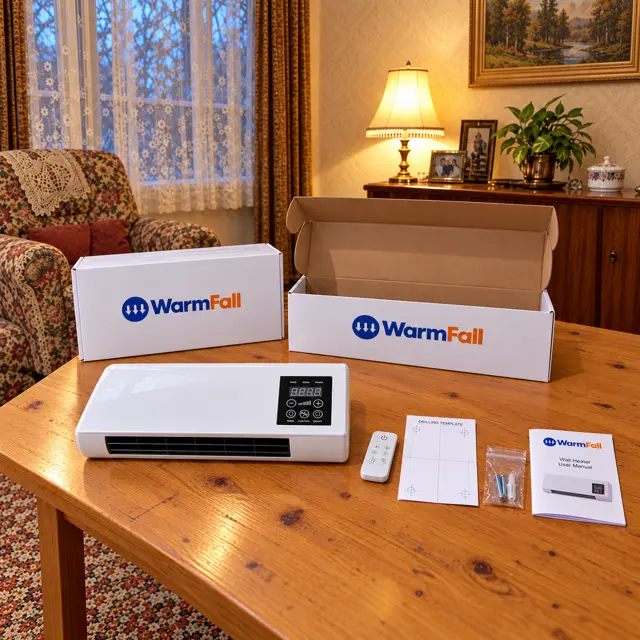
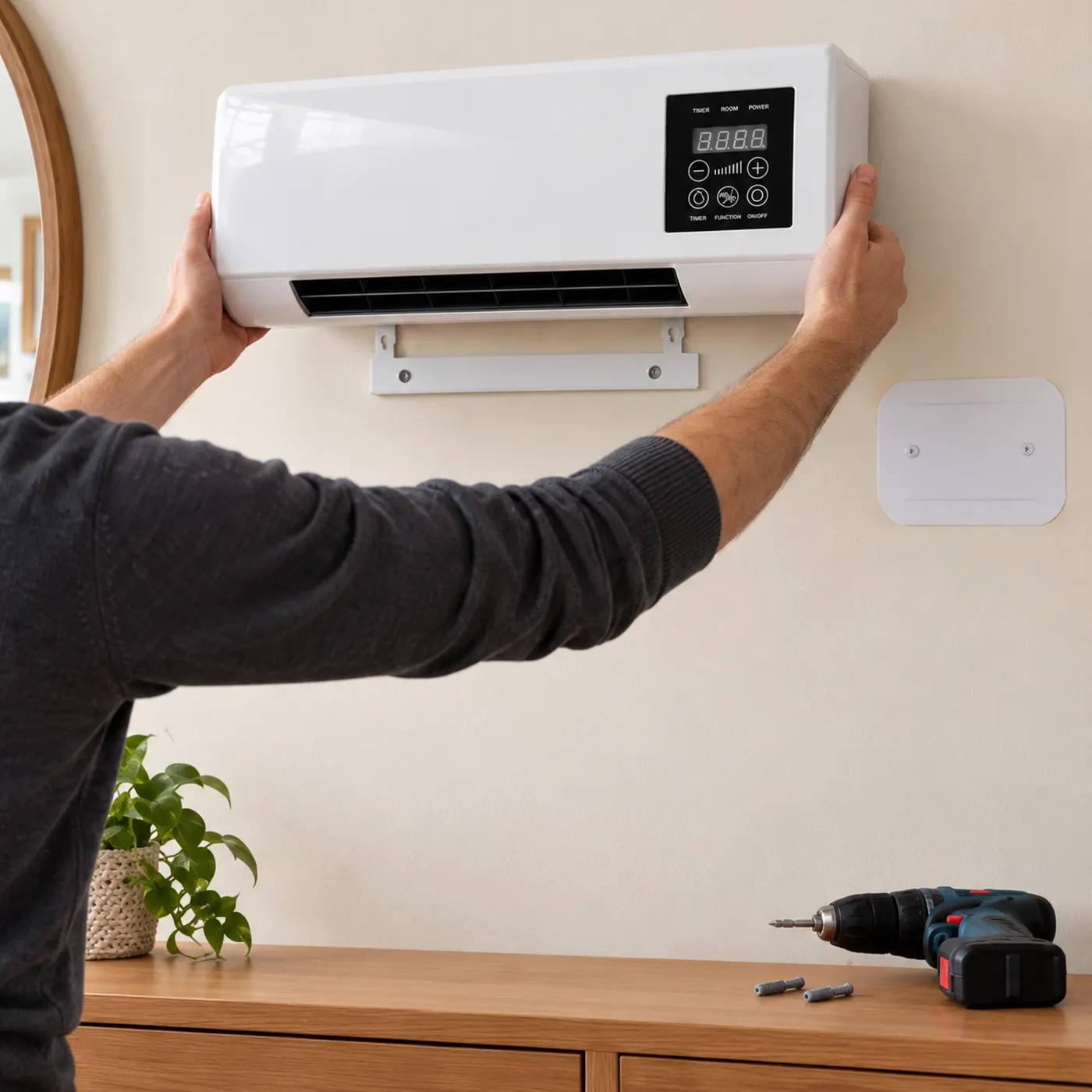
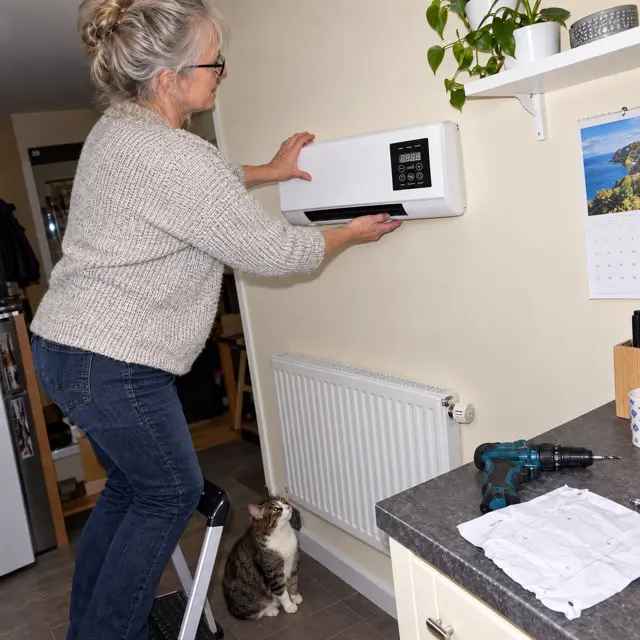
1. Template and two screws
Tape up the paper template about 1.8m high, drill two holes and screw on the bracket. Works on brick, plasterboard and breeze block.
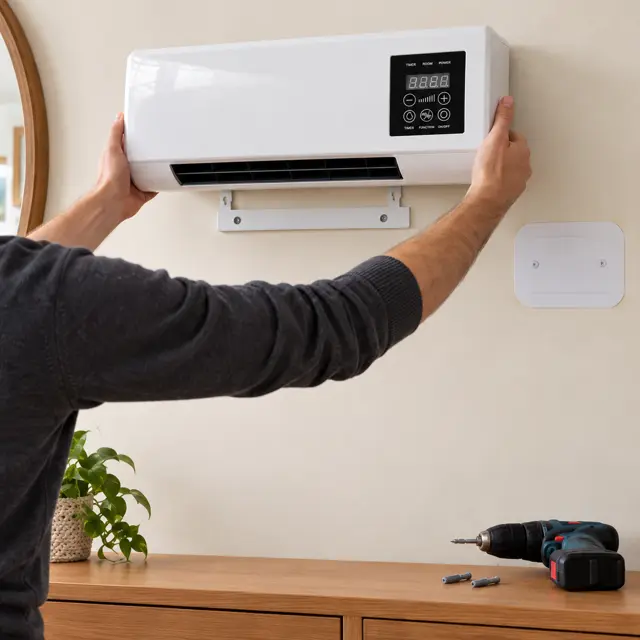
2. Hang it on the bracket
Lift the heater onto the bracket — it weighs about 2.8kg.
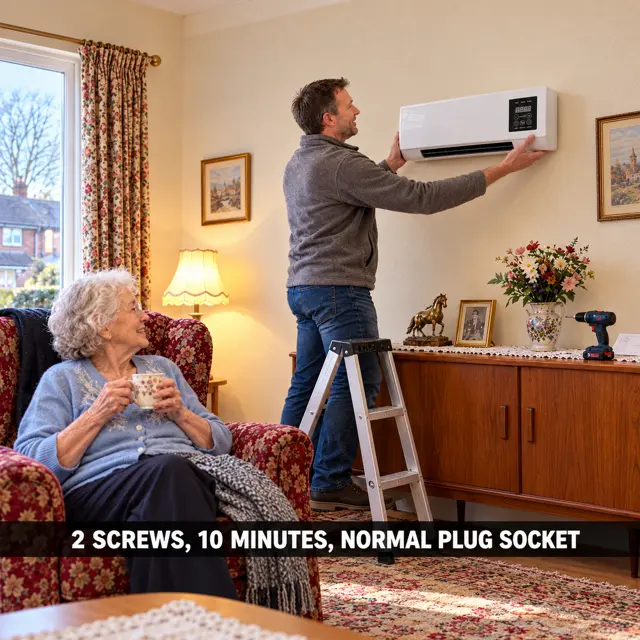
3. Plug in and switch on
Plug into a UK 3-pin wall socket and set the thermostat.
Plug-in vs hard-wired wall heaters
| Plug-in (like WarmFall) | Hard-wired | |
|---|---|---|
| Electrician needed | No | Usually yes (fused spur) |
| Fitting cost | None — DIY in about 10 min | Heater plus electrician's bill |
| Renter-friendly | Usually, with landlord's OK — 2 small holes | Often not allowed |
| Moving home | Unhook and take it with you | Stays with the wiring |
| Controls | Thermostat, remote, timer (WarmFall) | Varies by model |
Frequently asked questions
Can I plug a wall heater into an extension lead?
It's best not to. Plug a 2000W heater straight into a wall socket, and choose a mounting spot where the lead reaches it without stretching.
How high should the socket be?
WarmFall mounts about 1.8m up, so pick a wall where its lead reaches a normal UK socket below without strain. Check the manual for clearances.
Is a plug-in wall heater better than a portable heater?
It does the same job off the floor: no trailing lead to trip on, no hot unit for pets or children to knock, and warm air aimed down to where you sit.
Do plug-in wall heaters use a lot of electricity?
A 2000W heater uses 2kWh per hour at full power. With a thermostat it only uses full power until the room is warm, then tops up, so average use is lower.
Are plug-in wall heaters safe?
Choose one with an overheat cut-out, auto-off timer and UK plug, plug it directly into a wall socket (not an extension lead), and keep it clear of curtains.
Can I use a plug-in wall heater in a rented flat?
Usually yes, as there's no wiring. You'll drill 2 small holes, so check your tenancy agreement on fixings.
Does a plug-in wall heater need an electrician?
A model that simply plugs into a suitable existing socket does not normally need wiring work. If you need a new socket, circuit or fixed connection, use a qualified electrician. Always follow the product instructions.
Can I plug a wall heater into a multi-plug adaptor?
Avoid adaptors for a high-power heater unless the appliance maker explicitly permits it and the adaptor is rated for the load. Plug directly into a suitable wall socket and do not overload the circuit.
Will a plug-in wall heater work if the power goes out?
No. A plug-in electric heater needs mains electricity, so it will not produce heat during a power cut. Do not use a generator indoors or attempt unsafe alternative connections.
Can I use the heater while I am out?
Follow the manual and never leave it running unattended unless the manufacturer specifically says that use is appropriate. Set an automatic shut-off if available and switch it off when the room is empty.
Is wall mounting better than a portable heater?
It can keep floor space clear and reduce the chance of a trailing lead across the room. A portable heater may suit people who need to move heat between spaces. Both need careful placement and safe operation.
What if the plug or socket feels hot?
Switch the heater off and unplug it if safe to do so. Do not keep using a hot, damaged or discoloured plug or socket; seek advice from a qualified electrician and contact the manufacturer about the appliance.
Related guides
- Heaters for renters: warmth without rewiring
- Electric wall heaters: the UK buying guide
- What is the cheapest electric heater to run?
Sources
- Electrical Safety First
- Ofgem: Energy price cap unit rates and standing charges
- GOV.UK: Private renting
Running-cost figures are estimates based on the Ofgem price cap average of 26.32p/kWh (1 October–31 December 2026). Your costs depend on your tariff, room and usage.