
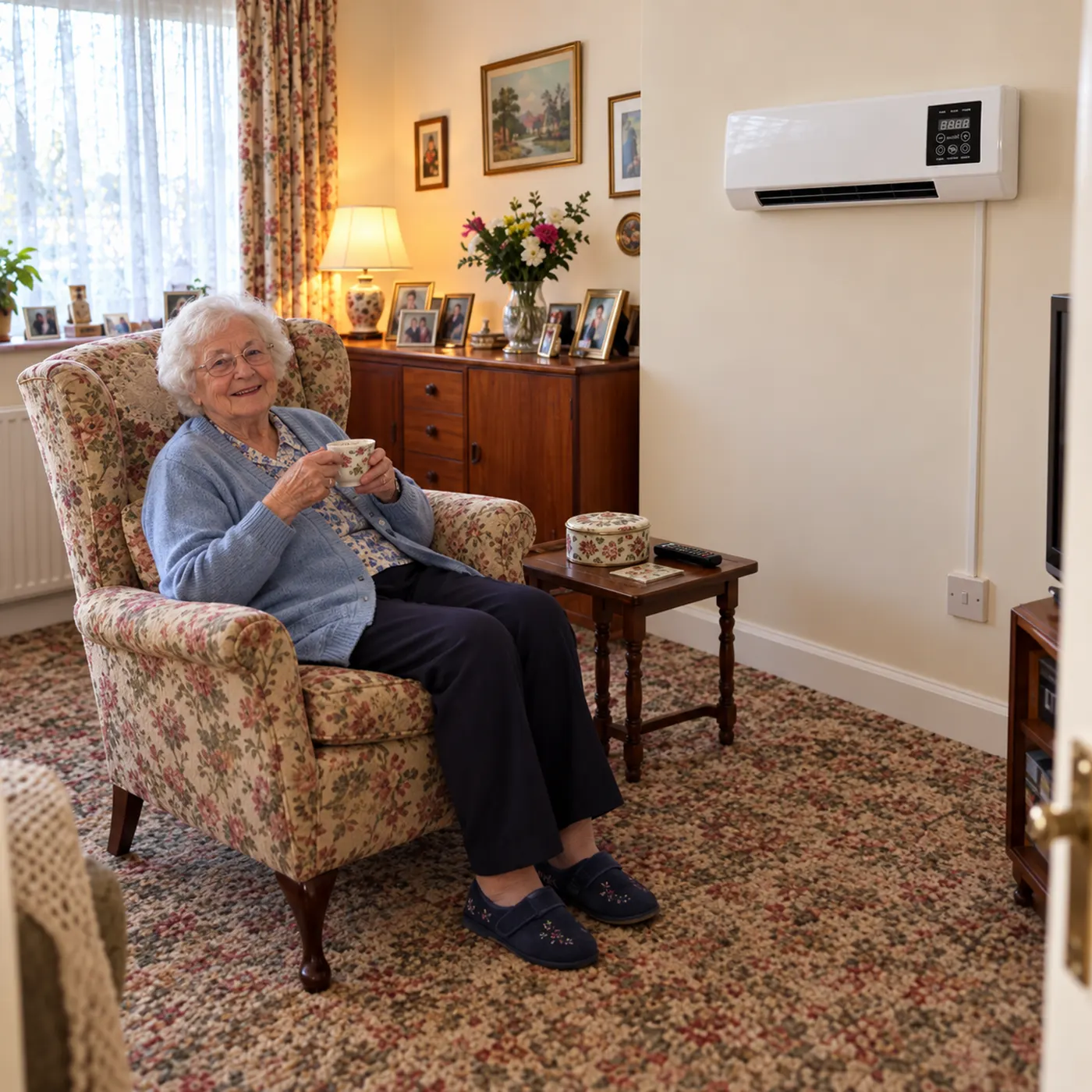
From £129
free UK delivery
About £0.53
an hour at full power
10 min
to fit, no electrician
30 days
money back
Written by the WarmFall team · Fact-checked 28 October 2026 · Sources listed below
How panel heaters work
Panel (convector) heaters warm air that rises out of the top and slowly circulates. They're silent but can take a while to make a cold room feel comfortable.
Where WarmFall is different
- Blows warm air downwards instead of letting it rise
- Faster warm-up from the ceramic core
- Plugs into a 3-pin socket with no wiring
- Remote control and 8-hour auto-off
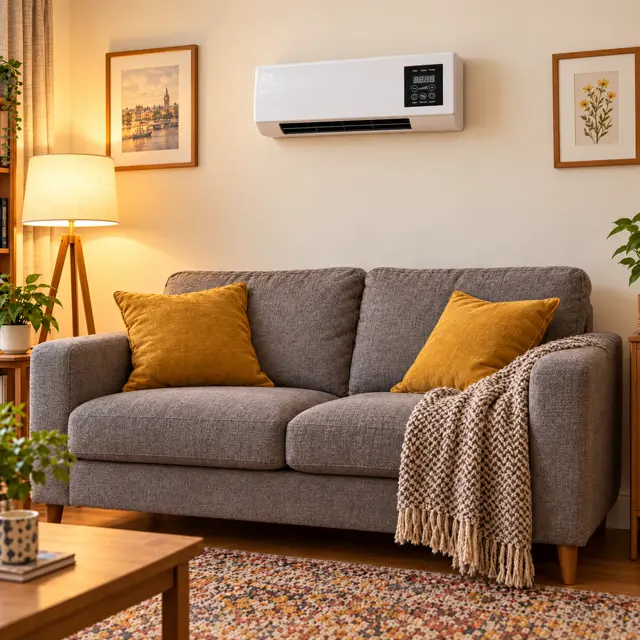
When a panel heater might suit you better
If you need completely silent background heat all day in a well-insulated room, a quality panel heater can work well. For fast, targeted warmth in the room you're using, WarmFall is the better fit.
What is a practical alternative to a panel heater?
A wall-mounted fan heater is one alternative when you want warmth quickly and need to keep floor space clear. Unlike a panel heater, which warms air gradually by convection, a fan model moves warmed air into the room. That can suit a room used for short periods, such as a home office or spare room. An electric radiator or infrared panel may suit other needs: radiators provide more gradual heat, while infrared warms people and surfaces in its path.
Compare installation before choosing. Many panel heaters are plugged in, while some are hard-wired; always check the particular model. A plug-in wall heater still needs a suitable socket and clear space around it. Do not choose on wattage alone: match output to room size, insulation and how you use the room. A 2kW model is intended for rooms up to about 25m², subject to the room itself.
Winter offer · Free UK delivery
Choose your WarmFall bundle
No account needed · Pay with Apple Pay, Google Pay, PayPal or card
- Free UK delivery
- 30-day money back
- Secure SSL checkout


You'll enter delivery details and pay by card, Apple Pay or Google Pay on our secure Shopify checkout.
Does a fan heater warm a room faster than a panel heater?
Fan heaters can make warmth felt sooner because a fan circulates heated air rather than waiting for convection to spread it. The exact result depends on the room, insulation, heater position and temperature setting. A fan also makes operating noise, whereas many panel heaters work quietly. Think about whether you need a quick boost or steady background warmth before deciding.
A thermostat helps either type avoid heating beyond the set temperature, although it does not make electricity free. With a 2kW heater running continuously at Ofgem's 26.32p/kWh unit rate, the arithmetic is 2 × 26.32p, or about 53p per hour. For a 90-minute session at full power, that is about 79p. Actual use may be lower when the thermostat switches the element off, and your tariff may differ.
Can I replace a panel heater without an electrician?
It depends on how the existing heater is connected and what you plan to install. A plug-in appliance can be used at a suitable socket, but removing or altering hard-wired equipment is electrical work and should be assessed by a competent professional. If you rent, ask the landlord before drilling or changing fixed equipment, and check the tenancy agreement.
A plug-in wall heater may be an option where you want to avoid new wiring. Check the manufacturer's mounting instructions, the wall type, socket position and required clearances. Do not use an extension lead to bridge a gap to the socket. Keep the supply accessible and do not obstruct the plug. Where you are unsure about the wiring, wall construction or permissions, get appropriate advice before fitting anything.
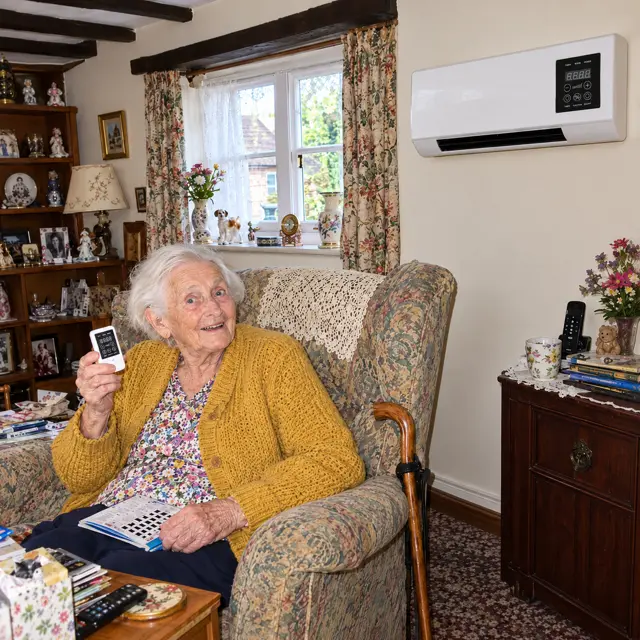
Which heater is better for occasional room heating?
For occasional use, a heater with straightforward controls and a thermostat is often more useful than a model chosen only for a high output. A fan heater can offer a short warm-up, while a panel heater can provide quieter, more gradual heat. Consider how long you stay in the room, whether noise matters and whether you need to carry the appliance or prefer a fixed wall position.
Calculate the likely session cost rather than relying on labels such as efficient. A 2kW electric heater at 26.32p/kWh uses about 53p for each hour at full output; two hours would be roughly £1.05. A thermostat may reduce consumption after the room reaches its setting, but heat loss, the set temperature and use patterns affect the result. Compare this with the convenience and comfort you actually need.
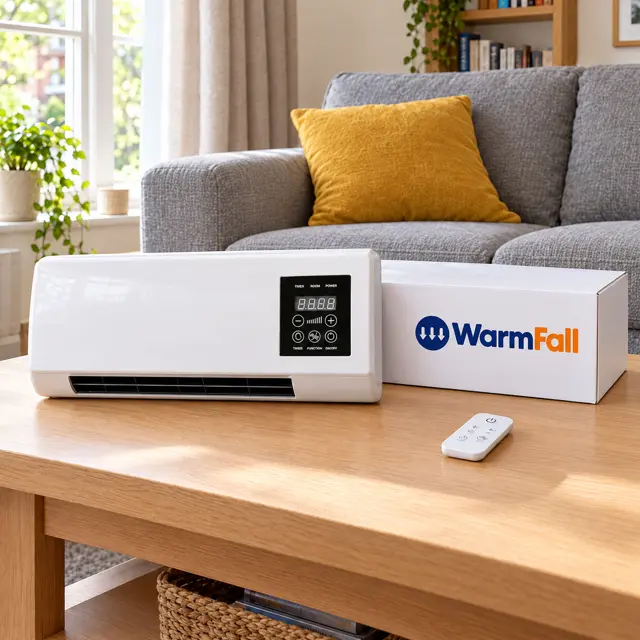
WarmFall 2000W Wall Heater
- Thermostat, remote & 8-hour timer
- Fits in 10 minutes, UK plug
- Free UK delivery · 30-day money back
What should I compare before buying an alternative?
Compare power, room suitability, thermostat, timer, safety features, noise, fitting and the plug. A cool-touch casing can reduce the risk of burns from touching the body, but it does not mean the hot air outlet is safe to touch or that the unit can be covered. A cut-out and automatic shut-off are useful protections, not substitutes for following the instructions.
WarmFall is one plug-in wall-heater option: it has a 2000W ceramic core, adjustable thermostat, remote, overheat cut-out and 8-hour auto-off. It weighs 2.8kg and mounts about 1.8m high using two screws and a paper template. Its DownFlow™ design directs warm air downwards. Check whether its room capacity and controls suit your own room, and compare it with other heater types without assuming that any electric heater costs less per unit of heat than another.
Panel heater vs WarmFall
| Panel heater | WarmFall | |
|---|---|---|
| Heat direction | Rises to ceiling | Blown down to you |
| Warm-up | Slower | Faster |
| Fitting | Often wired in | Plug-in, 2 screws |
| Noise | Silent | Soft fan hum |
Frequently asked questions
Are electric panel heaters expensive to run?
They use the same electricity per kWh as any heater. Cost depends on wattage, thermostat control and how long they need to run to warm the room.
Do panel heaters need an electrician?
Many wall panel heaters are hard-wired. Some plug in. WarmFall always plugs in.
Are panel heaters cheaper to run than fan heaters?
Both use electricity, so compare their energy use and your tariff rather than assuming one type is inherently cheaper. A 2kW heater operating at full output for an hour uses 2kWh. A thermostat can reduce the time the element is on, depending on room conditions and the chosen temperature.
Can a plug-in wall heater replace a panel heater?
It may suit the same room if its output and room suitability are appropriate, but the heating experience differs. A fan heater circulates warm air and may be felt sooner; a panel heater usually warms more gradually. Check fitting instructions and ask permission before drilling in a rented home.
How much does a 2kW heater cost per hour?
At 26.32p per kWh, a 2kW heater running at full output costs about 53p for an hour: 2 × 26.32p. This is an estimate based on that unit rate. Your tariff may differ, and thermostat cycling can mean the heater uses less than full power over the whole hour.
Is a fan heater noisy?
Fan heaters make some sound because they move air mechanically. The volume varies by model and setting, so check product information and, where possible, hear one operating before buying. A convection panel heater may be quieter, which can matter in a bedroom or room used for calls.
Do I need an electrician to install a wall heater?
A plug-in appliance normally connects to a suitable socket, but hard-wired heaters and changes to fixed wiring need proper electrical assessment. Follow the manufacturer's mounting instructions, and do not attempt wiring work if you are not competent. Renters should check with the landlord before drilling or altering fittings.
Does a thermostat reduce a heater's running cost?
A thermostat can stop the heater supplying full heat once the room reaches its chosen temperature, then switch it back on as needed. This can reduce energy use compared with running continuously, but the result depends on insulation, room temperature, settings and use. It does not change the electricity price per kWh.
Related guides
Sources
Running-cost figures are estimates based on the Ofgem price cap average of 26.32p/kWh (1 October–31 December 2026). Your costs depend on your tariff, room and usage.