
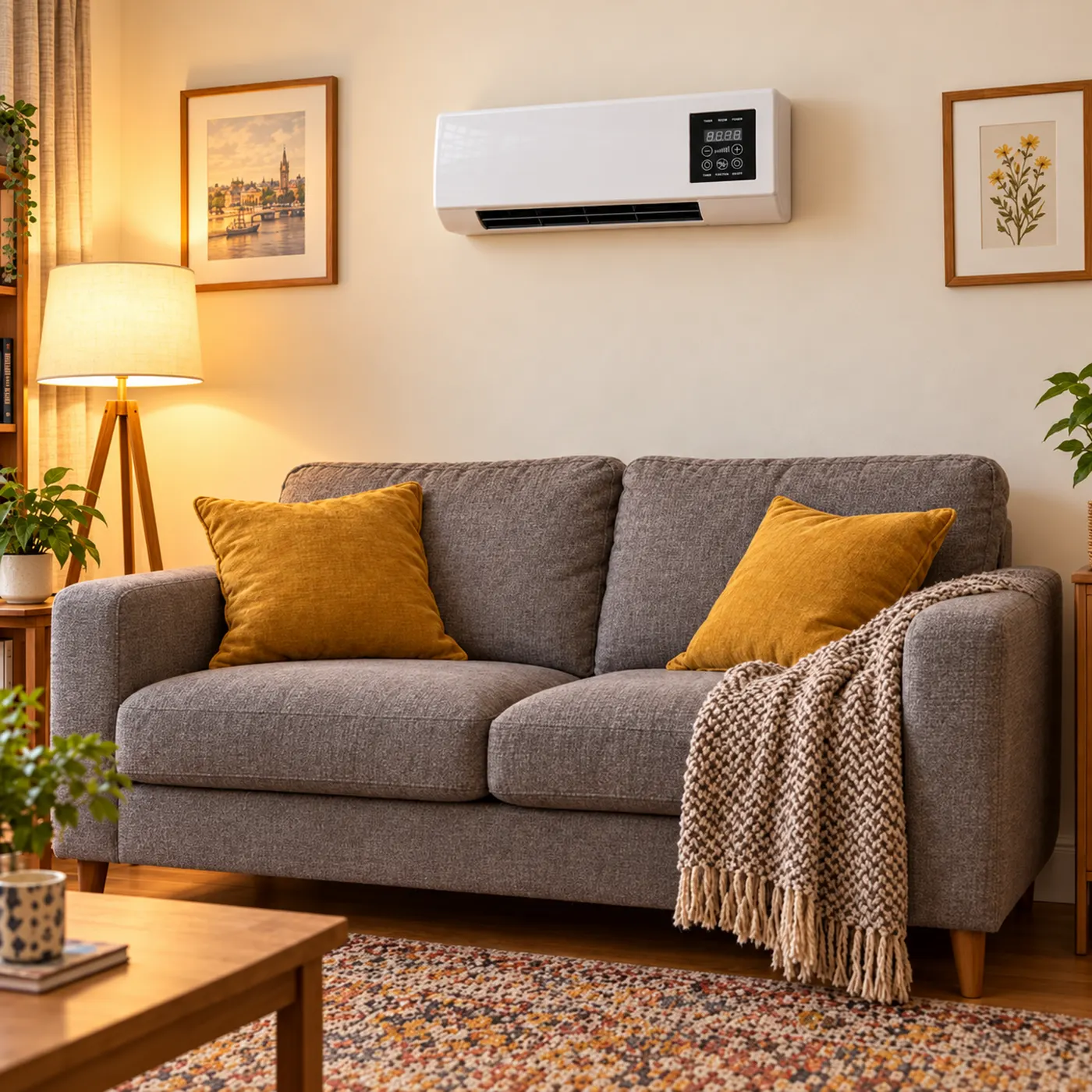
From £129
free UK delivery
About £0.53
an hour at full power
10 min
to fit, no electrician
30 days
money back
Written by the WarmFall team · Fact-checked 28 October 2026 · Sources listed below
Types of electric wall heater
- Plug-in fan wall heaters (like WarmFall): fast warmth, plug into a 3-pin socket, fit in minutes.
- Slimline panel (convector) heaters: quiet, but often slower to warm a room and many need wiring in.
- Electric radiators: oil or dry-filled, wall-mounted, usually hard-wired by an electrician.
- Infrared panels: heat objects in front of them; best if you sit in one fixed spot.
- Electric wall fires: decorative, often expensive and usually need fitting.
What to check before you buy
- Power and room size: roughly 1kW per 10–12m² in an average UK room.
- Thermostat: an adjustable thermostat stops the heater running flat out and saves money.
- Safety: overheat cut-out, auto-off timer and a cool-touch casing.
- Fitting: plug-in models avoid electrician fees (often £150–£250 for a single job).
- Plug: make sure it's a UK 3-pin plug, not a European plug with an adaptor.
- Control: a remote and timer make it easier to only heat when you need it.
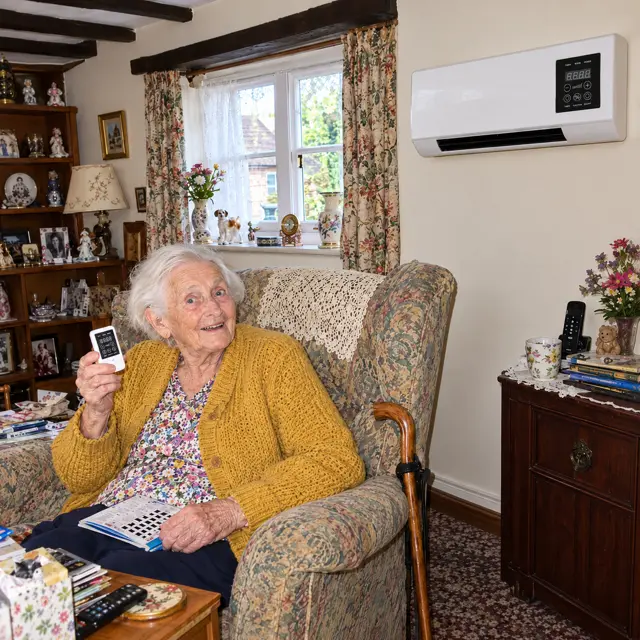
Why WarmFall is our pick
WarmFall is a 2000W plug-in wall heater with a ceramic core, adjustable thermostat, remote control, overheat cut-out and 8-hour auto-off. It mounts about 1.8m up the wall with 2 screws and blows warm air down to where you sit.
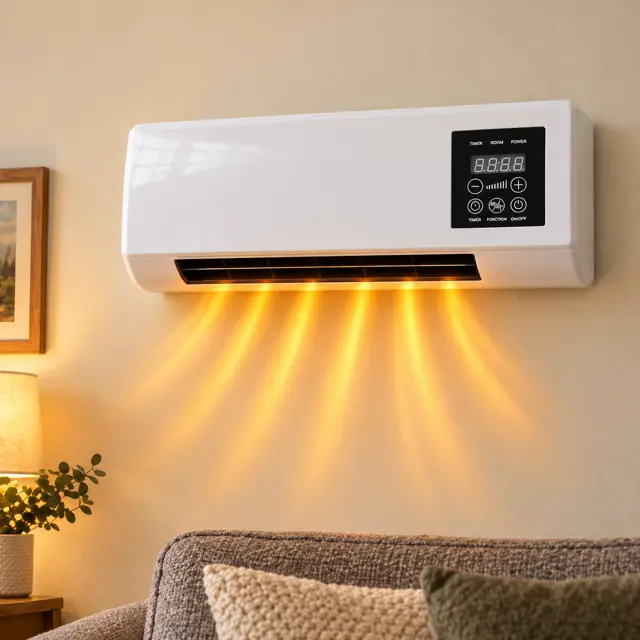
Because warm air rises, heaters at floor level spend a lot of energy warming the ceiling first. WarmFall's DownFlow™ design sends warmth down to you, so you feel it sooner.
Can an electric wall heater heat a whole room?
It can, provided its output suits the room and the heat has time to spread. A 2kW heater is intended for rooms up to about 25m², but that is a guide rather than a guarantee: ceiling height, draughts, insulation, windows and outside temperature all matter. A cold, poorly insulated room may feel comfortable only near the heater, while a smaller, well-insulated room warms more evenly. Keep doors closed if you want to concentrate warmth in one space, and avoid blocking the airflow with furniture or curtains. For a large open-plan area, consider whether a single heater can distribute warmth to every part; extra output may mean higher electricity use. A thermostat can reduce demand once the chosen temperature is reached, but cannot overcome poor room sizing.
How much does a 2kW wall heater cost per hour?
Work out the maximum cost by multiplying power in kilowatts by hours used and your electricity unit rate. At 26.32p/kWh, a 2kW heater running continuously for one hour uses 2kWh: 2 × 26.32p = 52.64p, or about 53p. Two hours at full power would be about £1.05. This is an estimate based on the stated unit rate, not a promise of a bill amount. A thermostat may switch the heating element off after the room warms, so actual consumption can be lower; it depends on the room and settings. Check your own bill for your unit rate, and remember that standing charges are separate and are not included in this calculation.
Winter offer · Free UK delivery
Choose your WarmFall bundle
No account needed · Pay with Apple Pay, Google Pay, PayPal or card
- Free UK delivery
- 30-day money back
- Secure SSL checkout


You'll enter delivery details and pay by card, Apple Pay or Google Pay on our secure Shopify checkout.
Where should I put an electric wall heater?
Choose a position with a nearby suitable socket and enough clear space around the heater. Do not put it behind furniture, close to curtains, or where coats and laundry could cover it. Think about the room layout: a clear line for warm air to reach the occupied area helps, and a closed door can keep warmth from escaping into a hallway. Follow the product's own mounting and clearance instructions rather than relying on a general rule. Before drilling, check carefully for hidden cables and pipes, and make sure the wall and fixings can support the appliance. If you are uncertain about the wall, socket or safe location, ask a competent person for advice. Never use an extension lead as a substitute for a correctly placed socket.
Is a wall heater suitable for occasional heating?
A wall heater can be useful when you want warmth in one room for a limited period instead of heating unused spaces. This may suit a home office, spare room or chilly sitting room, but the sensible choice depends on how often you use it and your tariff. Use the thermostat to choose a comfortable setting and switch the heater off when the room is empty. An auto-off timer can provide a backstop if you forget. Avoid treating a portable or plug-in heater as a way to heat a whole home continuously without checking the likely electricity use. Compare the estimated cost with your household budget, and address draughts and insulation where possible; those measures can help any heating system.
What should I check before drilling for a wall heater?
First check the manufacturer's instructions and supplied template, then choose a location that leaves the required clearance from furnishings and the socket. Identify the wall construction and use fixings suitable for that material; a fixing appropriate for solid masonry may not be right for hollow plasterboard. Check for hidden electrical cables and water or gas pipes before drilling, using a suitable detector and taking care. Mark the holes accurately and keep the appliance level. If you rent, read your agreement and get permission where required before making holes. Stop and seek help if the wall is damaged, the location is uncertain, or the heater cannot be securely supported. Do not modify the appliance or its plug to make it fit.
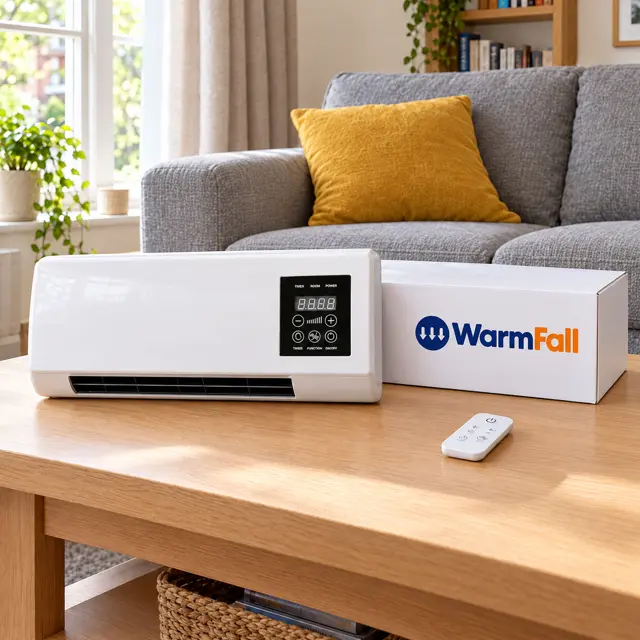
WarmFall 2000W Wall Heater
- Thermostat, remote & 8-hour timer
- Fits in 10 minutes, UK plug
- Free UK delivery · 30-day money back
Can a wall heater help with cold spots?
A heater may make a frequently used cold room more comfortable, but it does not repair the cause of a cold spot. Draughts around doors and windows, uninsulated walls, condensation and restricted airflow can all contribute. Note when and where the room feels cold, check for obvious draughts, and keep vents that are needed for ventilation unobstructed. If the issue is persistent damp, mould or a building defect, deal with that separately rather than simply heating harder. In a rented home, tell your landlord about disrepair and keep a record of the problem. A thermostat-controlled heater can provide local warmth, while sensible room use and basic draught reduction may help limit wasted heat.
Electric wall heater types compared
| Type | Fitting | Warm-up speed | Thermostat |
|---|---|---|---|
| Plug-in fan wall heater (WarmFall) | 2 screws, UK plug | Fast | Yes |
| Panel / convector heater | Often wired in | Moderate | Usually |
| Electric radiator | Electrician | Slow | Yes |
| Infrared panel | Often wired in | Instant (direct only) | Varies |
Frequently asked questions
Are electric wall heaters expensive to run?
A 2kW heater costs about 52p an hour at full power on a 26p/kWh tariff. With a thermostat, it cycles once the room is warm, so the average hourly cost is lower. Heating one room is often cheaper than running central heating for the whole house.
Do electric wall heaters need an electrician?
Hard-wired heaters do. Plug-in wall heaters like WarmFall plug into a standard UK socket, so you can fit them yourself.
What size electric wall heater do I need?
As a rough guide, 2kW suits rooms up to about 20–25m². Poorly insulated rooms or conservatories may need more.
Can I leave an electric wall heater on overnight?
Follow the manufacturer's instructions and use the controls as intended. Do not leave a heater running unattended unless it is specifically designed for that use. A timer or automatic shut-off can help avoid unnecessarily long operation, but it does not replace safe installation, clearances or supervision.
Does a wall heater need its own circuit?
Requirements depend on the appliance and whether it is plug-in or hard-wired. Follow its instructions and do not overload a socket or circuit. If electrical work or a new circuit is needed, speak to a qualified electrician rather than attempting wiring yourself.
Will a 2kW heater suit a 25m² room?
A 2kW model is specified for rooms up to 25m², but conditions affect comfort. Poor insulation, high ceilings, draughts or a very cold starting temperature may mean it takes longer or does not warm the whole space evenly.
Do wall heaters need maintenance?
Check the user manual for cleaning and maintenance. Switch off and unplug a plug-in appliance before cleaning it, and keep its air openings free of dust and obstructions. Do not open the casing or attempt repairs unless the manufacturer says this is safe.
Are electric wall heaters suitable for bathrooms?
Only use a heater specifically rated and approved for the bathroom location, and follow its installation instructions. A standard plug-in heater should not be placed where it could get wet. Ask a qualified electrician if you need bathroom heating advice.
Can I use one heater in different rooms?
A mounted model is intended to remain securely fixed in its chosen position. Do not carry or operate it in a way that conflicts with its instructions. If portability matters, compare products designed for portable use and keep them stable and clear of hazards.
Related guides
- Wall mounted electric heaters: what to look for
- Plug-in wall heater UK: no wiring, warm in 10 minutes
- What is the cheapest electric heater to run?
Sources
Running-cost figures are estimates based on the Ofgem price cap average of 26.32p/kWh (1 October–31 December 2026). Your costs depend on your tariff, room and usage.