
From £129
free UK delivery
About £0.53
an hour at full power
10 min
to fit, no electrician
30 days
money back
Written by the WarmFall team · Fact-checked 28 October 2026 · Sources listed below
Heat the room, not the house
If you're the only one home during the day, heating every room wastes money. A 2kW heater with a thermostat can keep one office comfortable.
Tips
- Set 19–20°C on the thermostat
- Keep the door closed
- Use the remote to switch on 20 minutes before you start
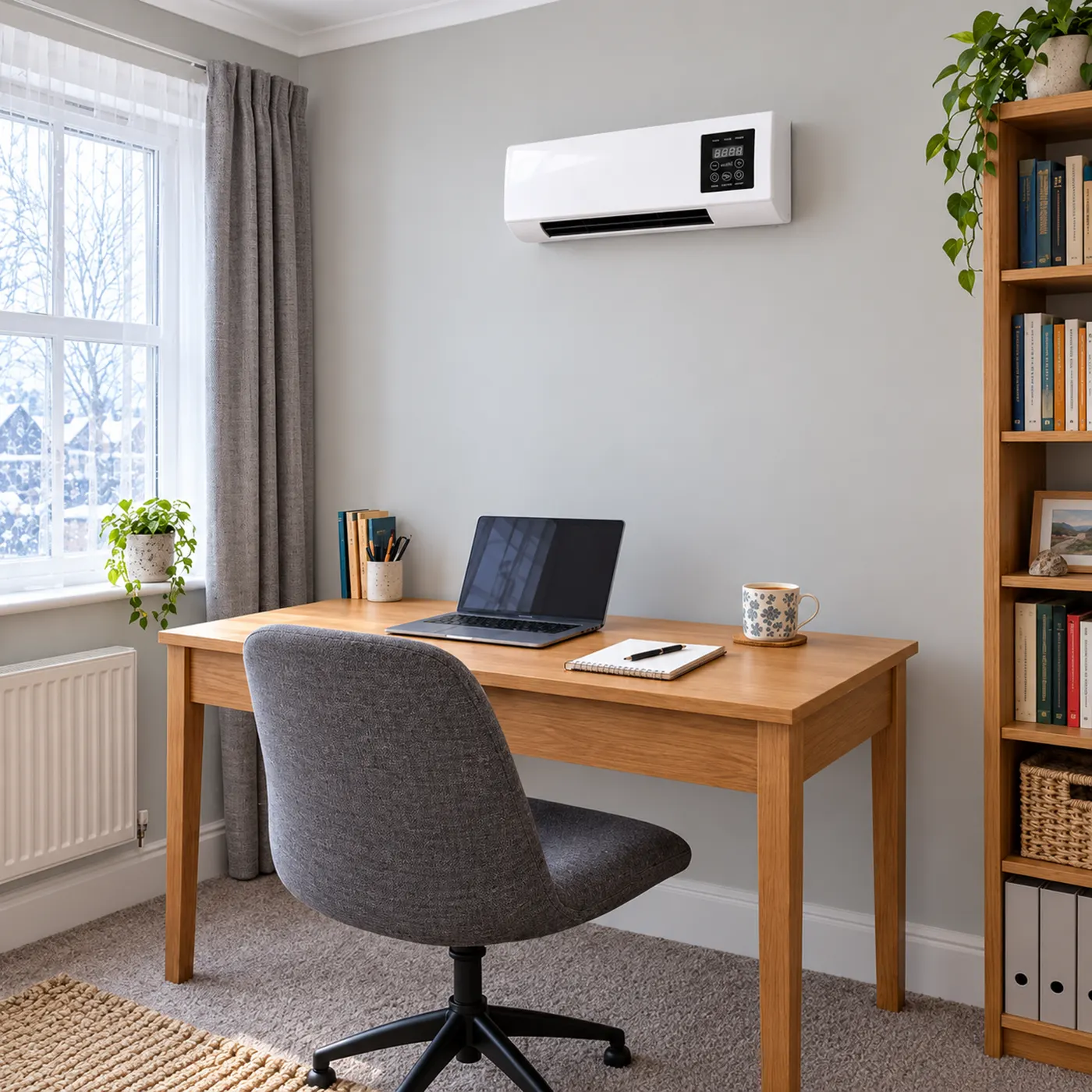
WarmFall in a home office
WarmFall is a 2000W plug-in wall heater with a ceramic core, adjustable thermostat, remote control, overheat cut-out and 8-hour auto-off. It mounts about 1.8m up the wall with 2 screws and blows warm air down to where you sit.
How much does it cost to heat a home office for a morning?
A useful estimate starts with power multiplied by time and your electricity unit rate. At 26.32p/kWh, a 2kW heater running at full power for four hours uses 8kWh and costs about £2.11. That is an estimate, not a prediction of your bill: a thermostat may reduce consumption by cycling the heater, while a cold or draughty room may keep it running more often. Your tariff may also differ from the Ofgem rate quoted here. For a real comparison, note how long the heater operates and check your bill's unit rate. Heating only the office may suit your routine, but compare it with the cost and settings of your existing heating system.
What temperature should a home office be?
Comfort depends on the person, activity, clothing and room, so there is no single setting that suits everyone. Begin with a modest thermostat setting and adjust it until you can work comfortably, rather than running a heater on maximum. Keep the office door closed if you want to focus warmth in that room, but maintain any ventilation required for the space. If you sit still for long periods, warm clothing and a draught-free desk area can make a difference. Do not put the heater close to your chair, papers or curtains, and make sure its air outlet is unobstructed. A thermostat controls the room temperature; it does not guarantee a specific energy cost.
Winter offer · Free UK delivery
Choose your WarmFall bundle
No account needed · Pay with Apple Pay, Google Pay, PayPal or card
- Free UK delivery
- 30-day money back
- Secure SSL checkout


You'll enter delivery details and pay by card, Apple Pay or Google Pay on our secure Shopify checkout.
Where is the safest place for a heater near a desk?
Choose a position that keeps the heater clear of paper stacks, curtains, cables and furniture, with its airflow unobstructed. Do not place it where a chair can knock it, where a lead crosses a walkway, or where heat blows directly onto equipment or documents. A wall-mounted heater can keep the floor clear, but it must be secured as instructed and connected to a suitable socket. Avoid extension leads unless the heater's instructions explicitly permit them; plugging directly into a wall socket is generally the safer choice. Keep the heater dry and use it indoors only. If the socket, plug or cable becomes hot or damaged, stop using the appliance and seek appropriate advice.
How can you avoid heating an empty office?
Match heating to your working day. Use a timer or remote, where provided, to start warmth shortly before you begin and switch off when you finish. A thermostat can help avoid continuous full-power operation after the room reaches the chosen temperature. If your routine changes, reset the schedule rather than leaving heating on by habit. Keep the door closed while working and reduce draughts, but do not block ventilation or cover the heater. An 8-hour auto-off feature can provide a backstop, not a reason to leave a heater unattended. Review your actual use over a week and adjust the timing; the best schedule depends on the room and how quickly it loses heat.
Can you claim the cost of a home-office heater?
Tax treatment depends on your work arrangement and circumstances. Employees and self-employed people can be subject to different rules, and buying a heater does not automatically mean its full cost is tax-deductible. Keep receipts and records, and check current HMRC guidance or ask a qualified tax adviser before making a claim. Self-employed people can find guidance on allowable business expenses on GOV.UK; employees should check the rules that apply to their own employment. Do not base a purchase on an assumed tax refund. For ordinary household use, consider the purchase price, installation requirements and estimated electricity use alongside any potential work-related use.
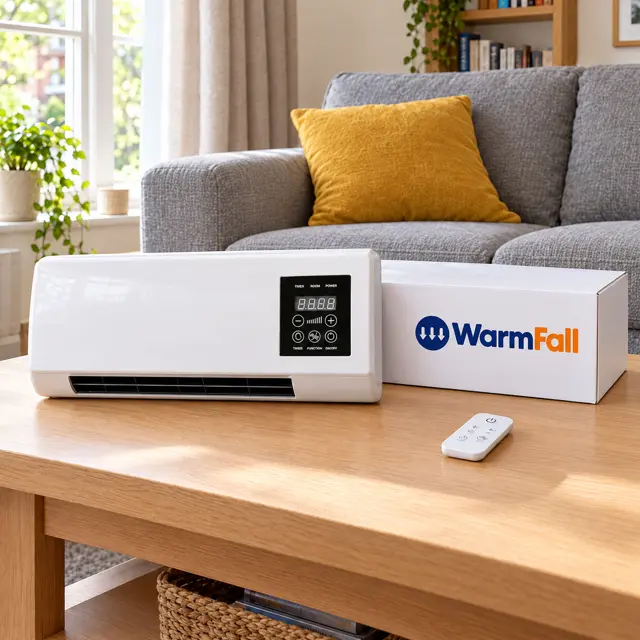
WarmFall 2000W Wall Heater
- Thermostat, remote & 8-hour timer
- Fits in 10 minutes, UK plug
- Free UK delivery · 30-day money back
Is a wall heater useful for a small home office?
A wall-mounted heater can free up floor space in a compact office and direct warmth into the room. Check the room size, wall construction, socket position and manufacturer's clearances before choosing a model. WarmFall is a 2000W plug-in wall heater with adjustable thermostat, remote control, overheat cut-out and 8-hour auto-off; it is designed for rooms up to 25m² in appropriate conditions. Mounting is not a substitute for safe placement: keep it away from paperwork and curtains, and use it only indoors in a dry space. Compare full-power cost with your working hours, while remembering that thermostat cycling can lower actual use.
Frequently asked questions
Is it cheaper to heat one room with an electric heater?
Often, yes, if you'd otherwise heat the whole house. Compare the cost of your boiler for the day with a heater just for your office.
How much does a 2kW heater cost for one hour?
At 26.32p/kWh, one hour at full power uses 2kWh and costs about 53p. It is an estimate based on that unit rate; your tariff may differ and a thermostat may mean the heater runs below full power for some of the hour.
Is it better to heat the office before I start work?
A timer or remote can let you warm the room shortly before use, rather than heating it for hours while empty. The ideal lead time depends on the room, heater and temperature. Follow the manufacturer's instructions and avoid unattended operation beyond any permitted timer use.
Can I put a heater under my desk?
Only if the product instructions allow it and there is adequate clearance. Do not block airflow or place the heater close to legs, cables, papers or other combustible items. A wall-mounted heater may be a better way to keep the floor and desk area clear.
Can a heater replace central heating while I work?
It can provide warmth in one occupied room, but whether it suits your household depends on other rooms, insulation, your heating system and energy tariffs. Consider comfort and total costs rather than assuming a portable electric heater will always be cheaper.
Can a self-employed person claim a heater as an expense?
Possibly, depending on the work use and applicable tax rules; it is not automatically deductible in full. Check current GOV.UK guidance on allowable expenses and keep records, or ask a tax adviser about your circumstances.
Are plug-in wall heaters noisy for video calls?
Fan heaters produce airflow and some operating sound, so consider this if you take calls in the room. Noise varies between models and settings. Check the product information and, if possible, assess it in the position where you plan to work.
Related guides
- What is the cheapest electric heater to run?
- The best heater for a cold bedroom
- Heaters for renters: warmth without rewiring
Sources
- Ofgem: Energy price cap unit rates and standing charges
- GOV.UK: Expenses if you're self-employed
- Electrical Safety First
Running-cost figures are estimates based on the Ofgem price cap average of 26.32p/kWh (1 October–31 December 2026). Your costs depend on your tariff, room and usage.