
From £129
free UK delivery
About £0.53
an hour at full power
10 min
to fit, no electrician
30 days
money back
Written by the WarmFall team · Fact-checked 28 October 2026 · Sources listed below
The truth about '1p per hour' heaters
At around 26p per kWh, 1p buys about 40 watts for one hour, which is less than an old light bulb. Plug-in heaters that warm a room use 1,000–2,000 watts. Claims of 1p an hour usually refer to tiny personal heaters or misleading maths.
What really makes a heater 'efficient' in practice
- A thermostat that stops it overheating the room
- Getting heat to you quickly so it can switch off sooner
- Timers and auto-off
- Heating one room instead of a whole house
Why WarmFall is a sensible choice
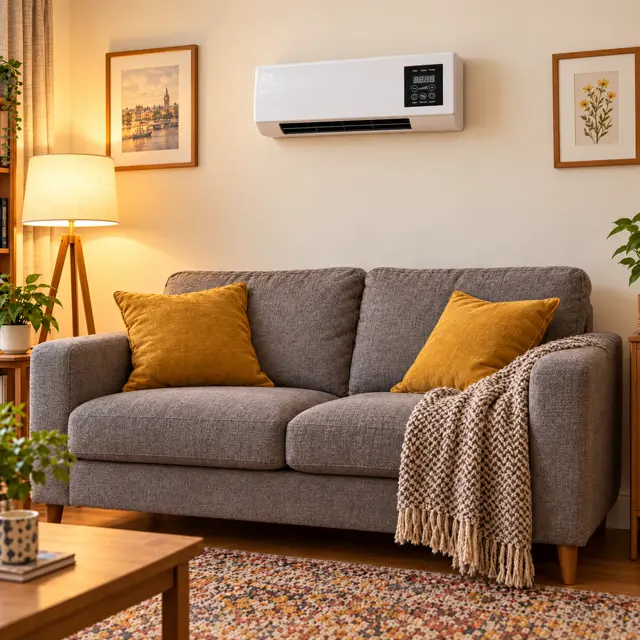
WarmFall is a 2000W plug-in wall heater with a ceramic core, adjustable thermostat, remote control, overheat cut-out and 8-hour auto-off. It mounts about 1.8m up the wall with 2 screws and blows warm air down to where you sit.
What does energy-efficient mean for an electric heater?
An electric resistance heater turns electricity into heat at the point of use, so the useful comparison is often how much energy is needed to keep a particular room comfortable and how well you control it. A product described as efficient does not automatically use fewer kilowatt-hours for the same heat. Room size, draughts, insulation, thermostat settings and the hours you heat all affect consumption.
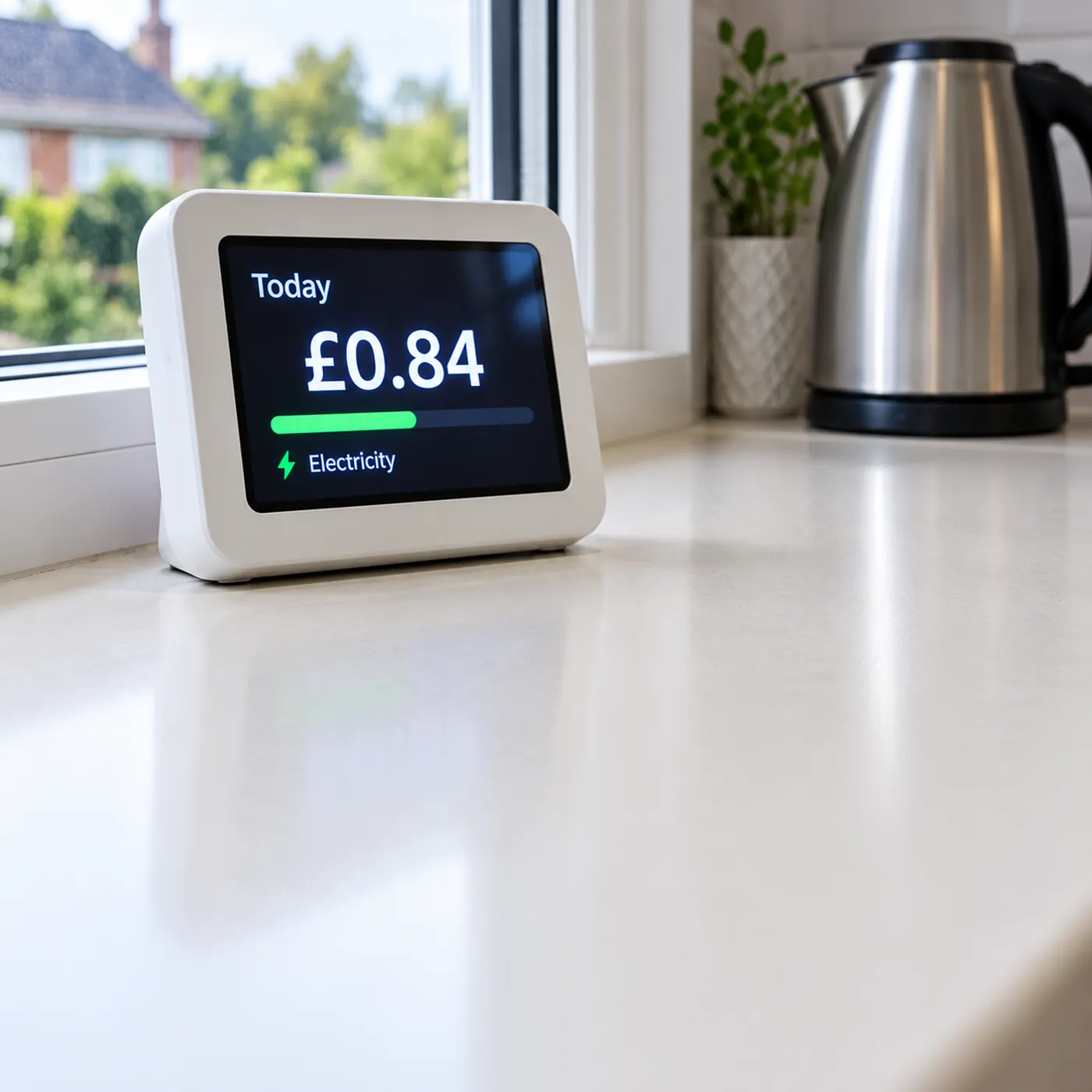
For a simple estimate, multiply the heater's power in kilowatts by the hours it is on, then multiply by your electricity unit rate. At 26.32p/kWh, a 2kW heater running at full power for one hour uses 2kWh and costs about 53p. That is an estimate, not a guaranteed bill figure. If a thermostat cycles the heater, actual consumption may be lower than continuous full-power operation.
Winter offer · Free UK delivery
Choose your WarmFall bundle
No account needed · Pay with Apple Pay, Google Pay, PayPal or card
- Free UK delivery
- 30-day money back
- Secure SSL checkout


You'll enter delivery details and pay by card, Apple Pay or Google Pay on our secure Shopify checkout.
Which heater uses the least electricity?
A heater's wattage and running time determine its electricity use; the right choice depends on the area you need to heat and for how long. A lower-wattage heater uses less energy each hour at full power but may take longer or be unsuitable for a larger, colder room. A high-wattage unit can warm a room faster, yet may use more energy while operating at full output.
Avoid comparing heaters only by claims about being low-cost or energy-saving. Check the rated power, thermostat, timer and room guidance. Heating one occupied room for a limited period can avoid heating unused spaces, but the best approach depends on your home's heating system and comfort needs. Energy Saving Trust offers general advice on home energy use; use your own meter readings and tariff for personal cost comparisons.
How can I estimate the cost of heating one room?
Use this calculation: kilowatts × hours × unit rate. For example, a 2kW heater used for three hours at full power on 26.32p/kWh would use 6kWh and cost about £1.58. The same heater used for one hour would cost around 53p. These are estimates using the stated unit rate; they do not include standing charges, and your own tariff may be different.
A thermostat may lower real consumption because the heater need not run continuously after the target temperature is reached. To get a more useful estimate, note how long the heater is actually drawing power and compare meter readings where possible. Keep the room's doors closed if appropriate and reduce draughts safely. Do not lower temperatures to a level that causes discomfort or risk, especially for people who are more vulnerable to cold.
Can a thermostat make an electric heater more efficient?
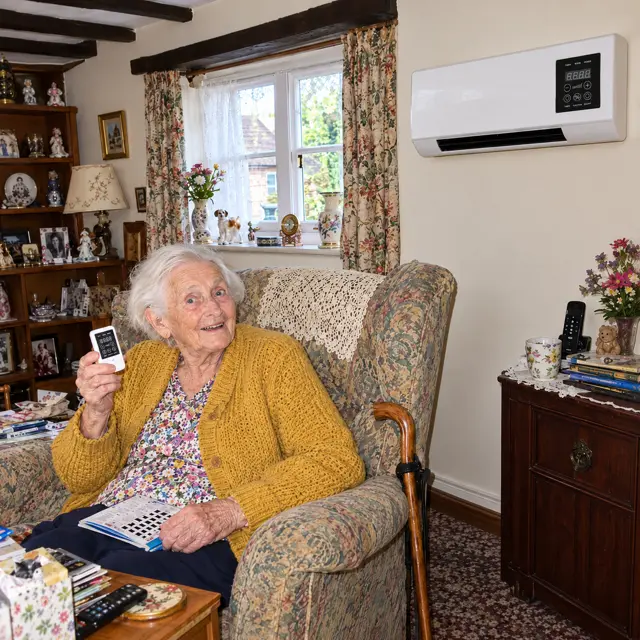
A thermostat does not change the heater's rated power or the price you pay per kilowatt-hour. It can, however, control when the heating element runs, switching it off when the selected temperature is reached and back on as the room cools. This avoids unnecessary continuous heating and makes it easier to maintain a chosen level of warmth.
Set the thermostat to a comfortable temperature rather than repeatedly turning the heater to its maximum. A timer can also limit heating to the periods when the room is in use. Results vary with room insulation, outside temperature, heater position and how often doors or windows are opened. For safety and correct operation, follow the manufacturer's guidance and do not cover the unit or block its air outlet.
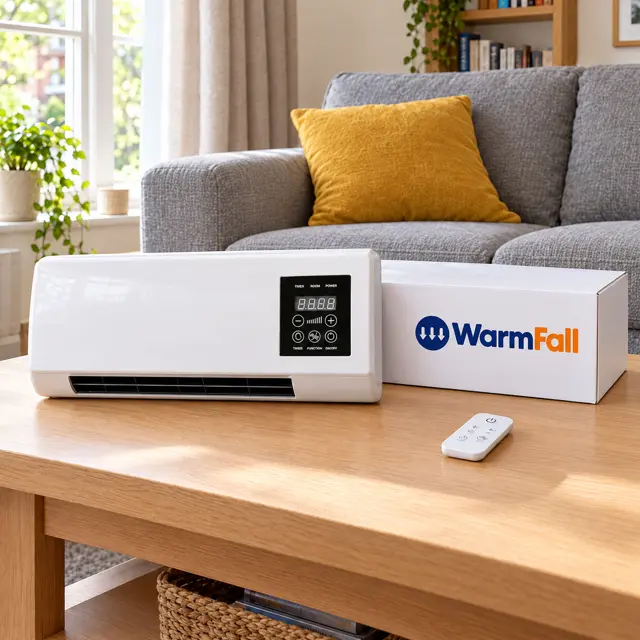
WarmFall 2000W Wall Heater
- Thermostat, remote & 8-hour timer
- Fits in 10 minutes, UK plug
- Free UK delivery · 30-day money back
Is it more efficient to heat a room or the whole house?
Heating only the room you are using can be practical if your central system allows individual room control and you spend much of the day in one place. But a portable or local electric heater is not automatically cheaper than using central heating: the answer depends on the energy source, tariffs, system efficiency, heat loss and how much of the home is heated.
Compare costs using actual rates and realistic operating times. For example, at 26.32p/kWh a 2kW heater running at full power for two hours costs about £1.05. A thermostat may reduce consumption, but this simple calculation assumes full output throughout. Avoid claims that electricity is cheaper than gas per kWh; unit prices and system performance differ, and prices change. Choose the arrangement that provides safe, comfortable heat where it is needed.
Frequently asked questions
What is the most energy efficient electric heater?
In terms of converting electricity to heat, they're all about equal. The most cost-effective is a correctly sized heater with a good thermostat, used only when and where you need it.
Are heat pumps more efficient?
Yes, heat pumps move heat rather than make it, so they can give 3kWh of heat per 1kWh of electricity, but they cost thousands to install. Plug-in heaters are for heating individual rooms affordably.
Are electric heaters 100% efficient?
Electric resistance heaters convert the electricity they use into heat at the point of use, but this does not mean they are free to run or that all models cost the same to operate. Your bill depends on energy consumed, the unit rate and how effectively you control heating and heat loss.
How many units does a 2kW heater use?
At full power, a 2kW heater uses 2 kilowatt-hours (units) in one hour. If it runs for half an hour at full power, that is 1kWh. A thermostat may switch the element off for some of the time, so actual use over a session can be lower.
Will a lower-wattage heater save money?
It uses less electricity per hour at full power, but it may need to run longer or fail to warm a room adequately. Compare the energy required to meet your needs, not just the hourly figure. Room size, insulation, thermostat operation and your tariff all affect the eventual cost.
Is a ceramic heater more efficient than a panel heater?
The ceramic material alone does not establish lower running costs. Compare rated power, controls and how each heater suits the room and usage pattern. At the same power and operating time, both use the same number of kilowatt-hours; comfort and thermostat cycling can affect how long they need to run.
How much does it cost to run a 2kW heater for an evening?
For three hours at full output and 26.32p/kWh, the estimate is 2 × 3 × 26.32p, or about £1.58. This excludes standing charges and uses the cited unit rate. Your tariff may differ, and a thermostat may reduce actual electricity use during the session.
Can heating one room reduce my bills?
It can avoid heating unused areas if your usual system offers suitable room-by-room control, but adding a separate electric heater does not guarantee a lower bill. Compare the energy source, unit prices and duration of use. Keep comfort and health in mind, and consult your energy supplier or an independent adviser if needed.
Related guides
Sources
Running-cost figures are estimates based on the Ofgem price cap average of 26.32p/kWh (1 October–31 December 2026). Your costs depend on your tariff, room and usage.