
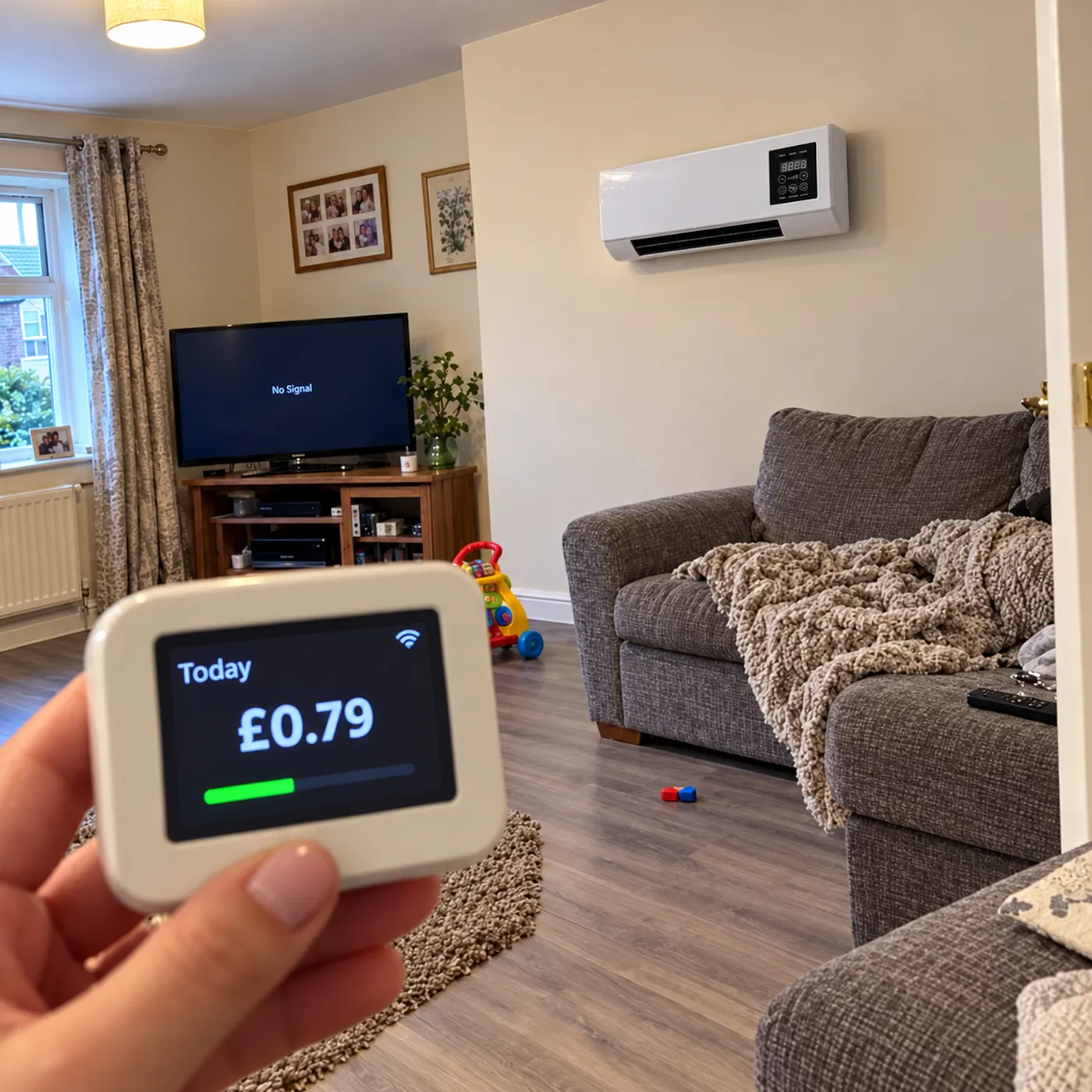
From £129
free UK delivery
About £0.53
an hour at full power
10 min
to fit, no electrician
30 days
money back
Written by the WarmFall team · Fact-checked 28 October 2026 · Sources listed below
Why wattage and control matter more than type
Running cost = power (kW) × hours × your unit rate. A 2kW heater for one hour at 26p/kWh costs 52p at full power. A 1kW heater costs 26p, but may take twice as long to warm the room.
The real savings come from a thermostat (so the heater stops once the room is warm), a timer or auto-off, and getting the heat to you quickly so you can run it for less time.
Ways to cut the cost of any heater
- Set the thermostat to 19–21°C rather than maximum
- Heat only the room you're in and close the door
- Block draughts and close curtains at dusk
- Use a timer or auto-off so it never runs longer than needed
Where WarmFall fits
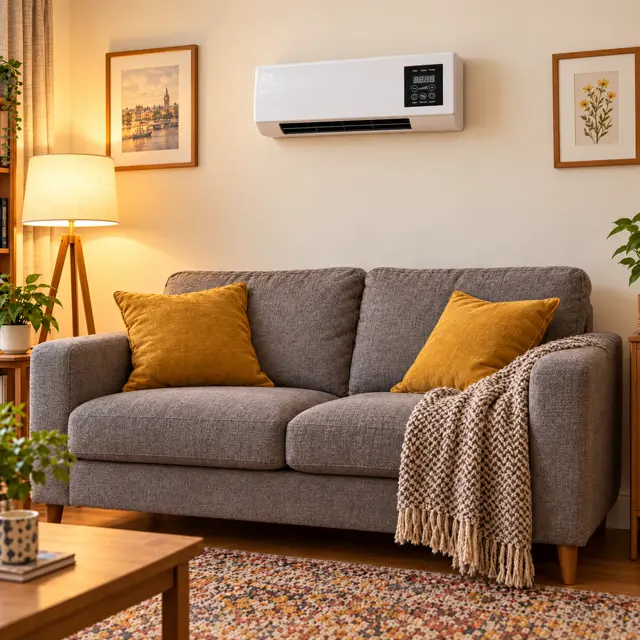
WarmFall is a 2000W plug-in wall heater with a ceramic core, adjustable thermostat, remote control, overheat cut-out and 8-hour auto-off. It mounts about 1.8m up the wall with 2 screws and blows warm air down to where you sit.
Its thermostat and downward airflow help you feel warm sooner and avoid running at full power all evening.
Which heater uses the least electricity per hour?
A lower-wattage heater generally uses less electricity each hour at full output, but it also supplies less heat. A 1kW model uses half the energy per hour of a 2kW model, yet may need longer to warm the same room. Electric resistance heaters convert electricity into heat in broadly similar ways, so a product name or element material does not by itself guarantee a lower bill. Compare the amount of heat you need, the time taken, thermostat control and how well the warmth reaches you. A useful comparison is energy consumed over the whole period you need the room warm, rather than headline hourly cost alone.
How do I calculate heater running costs accurately?
Use this formula: power in kW × hours of operation × unit rate in pounds per kWh. For example, a 2kW heater at full output for two hours uses 4kWh. At 26.32p/kWh, 4 × 26.32p = 105.28p, or about £1.05. That is a worked estimate and excludes the standing charge. Your meter or bill provides the relevant tariff; check whether it varies by time of day. A thermostat usually means the heater will not draw full power continuously once the room reaches its set temperature, but actual use depends on conditions. Keep notes on usage if you want to compare periods fairly.
Winter offer · Free UK delivery
Choose your WarmFall bundle
No account needed · Pay with Apple Pay, Google Pay, PayPal or card
- Free UK delivery
- 30-day money back
- Secure SSL checkout


You'll enter delivery details and pay by card, Apple Pay or Google Pay on our secure Shopify checkout.
Does a thermostat make an electric heater cheaper?
A thermostat does not change how much electricity the heater needs to produce a given amount of heat. It can reduce wasted energy by switching the element off when the room reaches the chosen temperature and turning it back on as needed. Without effective control, a heater may continue producing heat after the room is already comfortable. Use a sensible setting, close doors to the room you are heating and avoid placing furniture in the airflow. The savings depend on previous habits, room conditions and how long the heater runs; they are not a fixed percentage. A timer or auto-off can also prevent heating an empty room.
Is it cheaper to heat one room or the whole home?
Heating only the room you are using may use less energy than heating several unused rooms, but the answer depends on your heating system, tariff and home. Compare like with like: the cost of the electricity used by a local heater against the extra fuel and electricity needed by central heating. Do not assume one fuel is always cheaper per unit of heat. At 26.32p/kWh, for instance, a 2kW electric heater at full power for one hour is about 53p; that figure alone cannot establish a comparison with gas. Check your own energy rates and include how long each system needs to run.
What habits reduce the cost of electric heating?
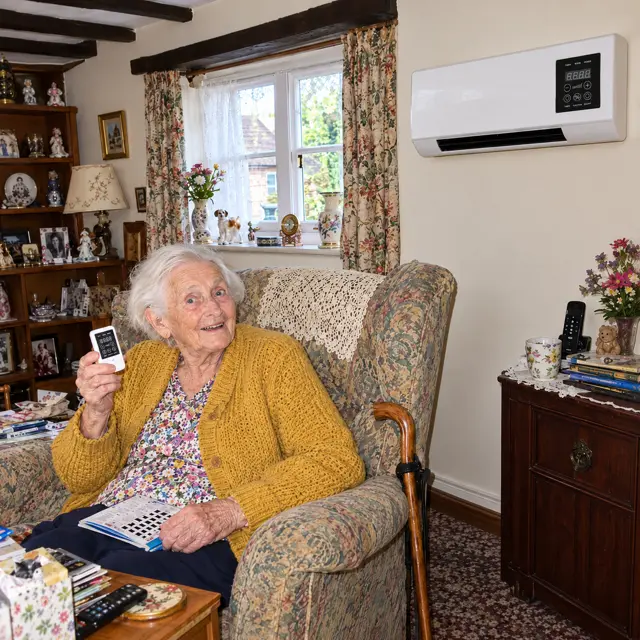
Heat the room you are using, keep the door closed where practical and choose a comfortable thermostat setting rather than maximum. Set a timer or use an auto-off function so the heater does not run for longer than intended. Close curtains after dark, deal with obvious draughts and keep the heater's outlet clear so warmth can circulate. Wear suitable clothing and use blankets where comfortable, without covering the appliance. These steps reduce unnecessary demand but cannot guarantee a particular bill saving. If a room remains cold despite prolonged heating, investigate draughts, insulation or building problems instead of simply increasing the setting. Use the manufacturer's controls and safety guidance.
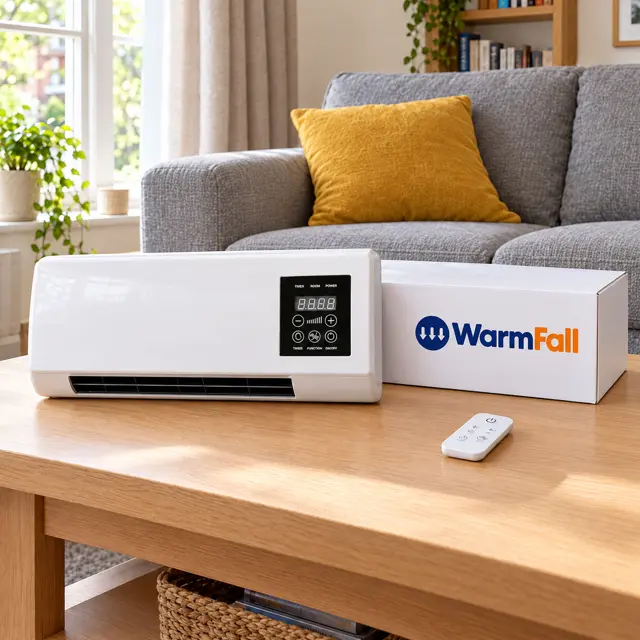
WarmFall 2000W Wall Heater
- Thermostat, remote & 8-hour timer
- Fits in 10 minutes, UK plug
- Free UK delivery · 30-day money back
Do ceramic heaters use less electricity than fan heaters?
Not simply because they are ceramic. The energy used depends mainly on the heater's power and how long it runs. A 2kW ceramic heater operating for an hour at full output uses 2kWh, just like another 2kW electric heater. A thermostat, timer, room size and pattern of use can affect the total consumption. Ceramic elements and fan-assisted designs may offer particular comfort or heat distribution, but they do not make electricity free or guarantee a lower cost per unit of heat. Compare controls and performance for the room you intend to heat, and calculate estimated costs from the stated wattage and your own tariff.
Maximum hourly cost at 26p/kWh
| Heater | Typical power | Max cost per hour | Thermostat |
|---|---|---|---|
| Halogen heater | 1.2kW | 31p | Rarely |
| Fan heater | 2kW | 52p | Sometimes basic |
| Oil-filled radiator | 2kW | 52p | Usually |
| WarmFall ceramic wall heater | 2kW | 52p | Yes, adjustable |
Frequently asked questions
Are halogen heaters the cheapest to run?
They use less power, so cost less per hour, but they heat only what's directly in front of them and rarely have a thermostat. They suit short bursts in one spot rather than warming a room.
Do '1p per hour' heaters really exist?
No mains heater that produces useful room heat costs 1p an hour. At UK prices, 1p buys about 0.04kWh. Be wary of these claims.
Is an electric heater cheaper than central heating?
Heating one room electrically can cost less than heating the whole house with the boiler, especially if you only use one room. It depends on your tariffs and home.
What is the hourly cost of a 1kW heater at 26.32p/kWh?
At full output for one hour, it uses 1kWh, so the estimated energy cost is 26.32p. This excludes standing charges and assumes your applicable unit rate is 26.32p/kWh.
Does a heater use electricity when its thermostat switches off?
The heating element stops drawing its full heating power when switched off by the thermostat, though controls may use a small amount depending on the model. Check the product information for standby consumption.
Is a low-wattage heater always cheaper overall?
It costs less per hour at full output, but may take longer to warm a room. Compare total energy used over the time you need warmth, not just the hourly price.
Do oil-filled radiators cost less to run?
They use electricity to produce heat like other electric resistance heaters. Their heat retention and thermostat behaviour affect how they feel in use, but they do not inherently make each kWh of heat cheaper.
Can a timer reduce my heating bill?
A timer can prevent avoidable operation when you do not need warmth. Any saving depends on how the heater was previously used, your tariff and how much heating is required.
Where can I check my electricity unit rate?
Check your latest bill, online account or tariff information. Ofgem's price-cap information explains unit rates and standing charges, but your actual tariff and payment method may differ.
Related guides
- Energy efficient heaters: what actually saves money
- Ceramic heaters explained
- Electric wall heaters: the UK buying guide
Sources
Running-cost figures are estimates based on the Ofgem price cap average of 26.32p/kWh (1 October–31 December 2026). Your costs depend on your tariff, room and usage.